
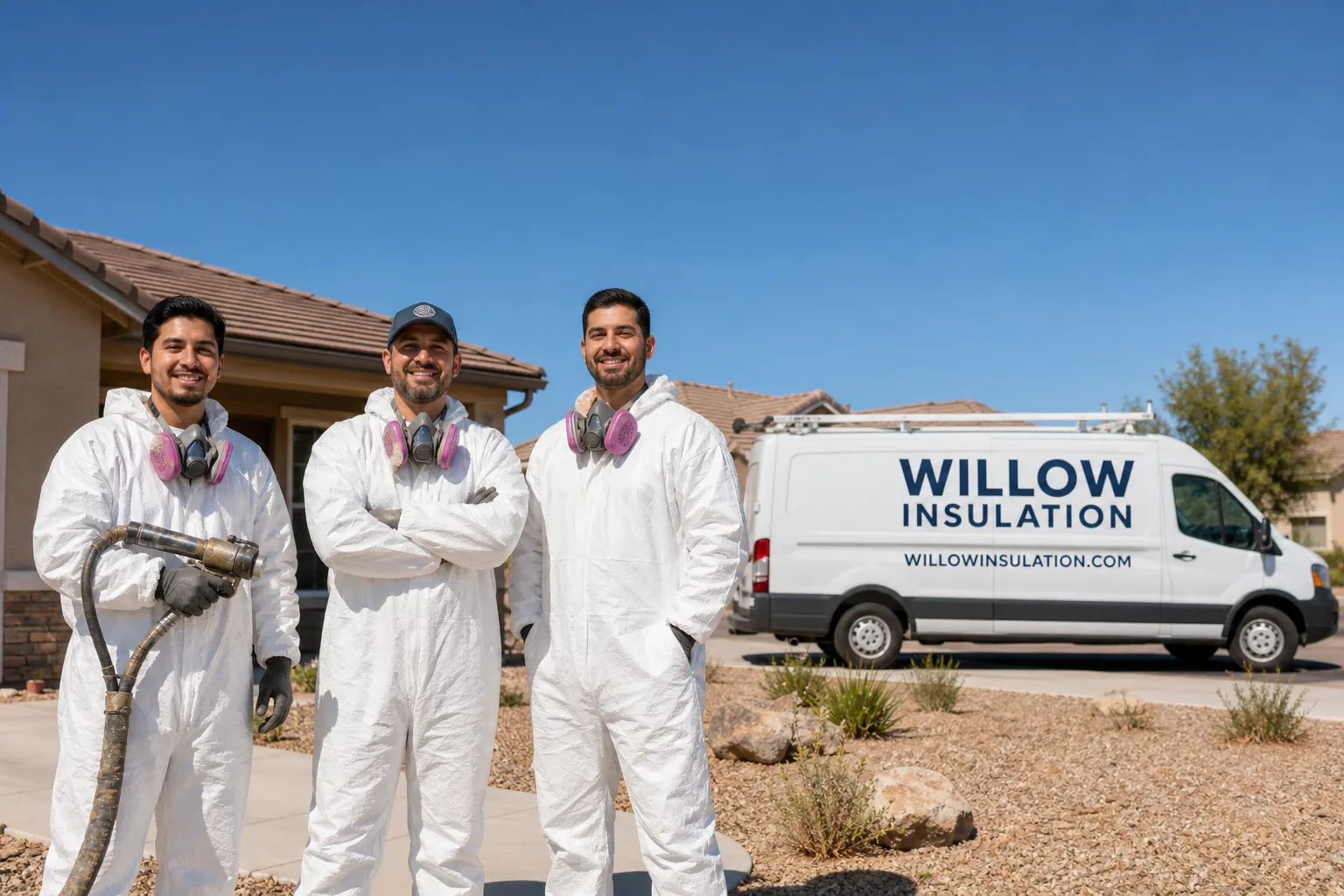
Fast, Reliable Spray Foam Insulation Across March Air Force Base
Spray foam insulation in March Air Force Base costs roughly $3.50 – $7.50 per square foot for open-cell and $5.50 – $11.00 for closed-cell, with most whole-attic jobs in 92551 landing between $5,000 and $14,000 depending on scope. We work throughout March Air Force Base regularly, including the older housing rows around the base perimeter, and we know exactly what those 1940s and 1950s wood-frame units throw at an insulation crew. If you’re fed up with hot upstairs rooms in July or dust blowing through trim gaps every time the Santa Anas kick up, call Willow Insulation at (855) 473-6541 and we’ll look at your walls, attic, and rim joists as a single system.
Why Willow Insulation Is March Air Force Base’s Preferred Spray Foam Insulation Company
We’ve earned repeat work in March Air Force Base because we understand what most insulation companies miss here: the housing stock is not typical Riverside County suburbia. The homes off Riverside Drive and around the old base housing blocks are small, wood-framed, stucco-skinned, and built when insulation meant a thin layer of rock wool under the floorboards. Homeowners in March Air Force Base call us because our team, led by Noel Castaneda, has spent years retrofitting exactly these buildings. We know where the wall-furnace chases run, where the stucco weeps moisture after a rare winter storm, and why air sealing matters more than R-value alone in this dry inland climate. We carry eight manufacturer brands, including Demilec and Owens Corning, so when we recommend closed-cell for a moisture-prone wall or open-cell for a vented attic, the material choice is driven by your house, not our inventory.
Spray Foam Insulation Contractors in March Air Force Base
Spray Foam Insulation Contractors in March Air Force Base handle a specific type of retrofit that other cities rarely see. The job here often means working around original 1950s wall furnaces, their metal flues, and the open stud bays that surround them. March Air Force Base homes from the 1940s through the 1960s were built fast and cheap for base personnel, and many walls were never insulated at all. When we spray those cavities, the first step is always verifying what’s inside the wall: wire runs, flue chases, plumbing, and the occasional surprise like daylight showing through a rim joist. A typical wall cavity retrofit in March Air Force Base runs $3,000 – $8,000 depending on how much of the framing is accessible and how much flue work is involved. Noel Castaneda and our crew will open a wall, check the chase, and tell you honestly whether spray foam is the right material before we ever mix a barrel.
Wall Cavity Retrofits
Filling empty stud bays in a 1952 wood-frame unit is the classic March Air Force Base spray foam job. We drill access holes from inside or pull siding outside, then inject low-expansion foam so it doesn’t bow brittle old stucco. The goal is a tight seal against dust, pests, and that brutal afternoon heat that soaks west-facing walls.
Rim Joist Sealing
Houses in 92551 sit on raised foundations, and the rim joist where the floor frame meets the foundation is a notorious leak point in this ZIP code. We spray closed-cell foam along the entire perimeter rim to stop air movement and keep rodents and roaches from using the gap as a highway. This small fix, usually $1,200 – $2,800, often cuts drafts more than a full attic job.
Spray Foam Attic Insulation in March Air Force Base
Spray Foam Attic Insulation in March Air Force Base is the single most effective upgrade for these older base homes, because the climate punishes attics. Inland Southern California summers push attic temperatures past 140 degrees, and that heat radiates down through uninsulated ceilings all afternoon. In March Air Force Base’s 1940s-era homes, the original attic insulation is often thin, compacted, or gone entirely. We spray open-cell foam directly under the roof deck to create a conditioned attic, which keeps ductwork from baking and keeps second-story rooms from turning into ovens by 4 p.m. A full attic spray in March Air Force Base runs $6,000 – $12,000 on average; smaller garages and storage attics fall under that range. The family feels the difference the first week, not in some future season.
Roof Deck Application
Spraying directly to the underside of the roof sheathing turns the attic into semi-conditioned space. This works especially well in March Air Force Base homes with the furnace or ductwork running through the attic, since the equipment stops sitting in a 140-degree box every afternoon. We use Icynene open-cell for this application in most cases, and in moisture-prone spots we’ll step up to a Demilec closed-cell product.
Garage Ceilings and Bonus Rooms
Many March Air Force Base homes have converted garages or add-on rooms with no insulation at all above the ceiling. We spray closed-cell directly between the joists in those low-clearance spaces to add insulation without lowering headroom. Homeowners in 92551 who use the garage as a workshop or laundry area notice the temperature shift immediately.
Trusted Brands We Service in March Air Force Base
We install and service spray foam systems from Demilec, Icynene, and Owens Corning, which means a March Air Force Base homeowner never gets steered toward one product because it’s the only thing sitting in our shop. Demilec closed-cell foam gives you high R-value per inch and structural rigidity, which matters when we’re working inside thin 2×4 wall cavities typical of the 92551 housing stock. Owens Corning materials give you warranty-backed performance on attic and rim joist work. We keep our spray rigs stocked with the materials these older March Air Force Base houses actually need, and because we’re based out of Victorville and working in the area regularly, we don’t waste a trip getting the right foam to your job site.
Common Spray Foam Insulation Problems We See in March Air Force Base Homes
- Wall furnace flues running uninsulated chases. The original 1950s gas wall furnaces in many base houses vent through thin metal flues hidden inside wall cavities. Spraying foam directly against a hot flue or sealing the combustion air opening can create a carbon monoxide hazard. We check the chase first, install proper clearances or a high-temp barrier, and only then seal the surrounding cavity.
- Rim joists and top plates left wide open. The 1940s-50s stucco-over-wood construction in March Air Force Base leaves dozens of small gaps where framing meets foundation and where walls meet attic. If you fill the wall cavities but skip these seams, the foam underperforms and dust still finds its way in. We air-seal the perimeter as part of every foam job here.
- Moisture trapped behind closed-cell foam in older stucco. Some March Air Force Base homes have original building paper behind the stucco that’s deteriorated, plus hard clay soil that holds water against the foundation after rain. If we spray closed-cell directly against a leaking wall, the moisture gets sealed in. We inspect and address the water path before foam goes in.
- Pest and dust intrusion through dry-season gaps. March Air Force Base sits in a dry inland basin where dust and Argentine ants push into homes through the smallest openings. Spray foam is the best material in this climate for closing those gaps permanently, but only when installed as a continuous air barrier across all six sides of the house envelope.
Pricing for Spray Foam Insulation in March Air Force Base, CA
Here are honest numbers for March Air Force Base, not national averages that don’t match what we actually quote in 92551. Open-cell attic spray runs $3.50 – $5.50 per square foot of surface area, so a 1,200-square-foot attic flat costs $4,200 – $6,600. Closed-cell runs $5.50 – $8.50 per square foot and lands on high-moisture walls, rim joists, and garage ceilings. A full wall retrofit in a small 1950s base house typically costs $3,500 – $7,000 depending on access and flue work. Rim joist sealing alone runs $1,200 – $2,800. The biggest cost drivers in March Air Force Base are the age of the framing, how much old flue work has to be corrected before we can spray, and how much demolition access the stucco requires. Call (855) 473-6541 for a free walk-through and a written number before you commit to anything.
We Also Serve Cities Near March Air Force Base
Our crews cover all of the surrounding Inland Empire communities from our Victorville base, including Moreno Valley, Woodcrest, Perris, and Good Hope. If you’ve been comparing Spray Foam Insulation options across the region, we’ll give you the same honest material recommendation no matter which ZIP you’re in. This page is focused on the unique challenges of March Air Force Base, but our team knows every housing style in this stretch of Riverside County.
Serving March Air Force Base, CA — Our Local Coverage Area
We’re based in the March Air Force Base area and know this community well. Use the map below to see our service coverage — if you’re nearby, we can almost certainly help.
FAQs About Spray Foam Insulation in March Air Force Base
Yes. Spray foam is the most effective material for closing the rim joists, top plates, and wall penetrations in March Air Force Base’s older wood-frame homes, and those gaps are exactly where dust, Argentine ants, and roaches enter during the dry season. Unlike fiberglass batts, which filter air and let dust pass through, closed-cell foam creates an actual air barrier. The key is that the installer has to seal the perimeter before spray, not just fill cavities and call it done. Call (855) 473-6541 and we’ll show you where the entry points are.
We can usually be on site in March Air Force Base within 24 to 48 hours of your call, and same-week starts are typical for smaller jobs like rim joist sealing. For full attic or wall retrofits, we’ll schedule a walk-through first and give you a written scope so you know what the crew will do on install day.
Yes. Many homes in the 92551 ZIP are rental units that have to pass regular military housing inspections, and we’ve worked on dozens of them. Our crew knows what inspectors look for regarding wall furnace clearances, flue integrity, and basic habitability standards. After we seal legacy flue chases and air-seal the shell, most units pass inspection without the owner having to replace the original furnace.
No. The per-square-foot material cost is the same, but older March Air Force Base homes sometimes run slightly higher on labor because of the prep work: verifying old wall furnace flues, correcting moisture paths behind stucco, and working around brittle 70-year-old framing takes time. You’ll pay more for a complicated retrofit here than for a clean new-construction job in a nearby city, but the fixed pricing we quote you won’t change based on which ZIP in the region the house sits in.
We stand behind every spray foam install we do in March Air Force Base, and the specific warranty terms depend on the material we use. Demilec and Owens Corning both provide manufacturer warranties on their foam systems when installed by an authorized contractor. Give us a call at (855) 473-6541 and we’ll walk you through what applies to your specific job before you sign anything.
Get Your Spray Foam Insulation Quote in March Air Force Base
If your March Air Force Base home is still running hot in the summer, dusty year-round, or chasing you up the walls with energy bills that never seem to drop, we’d rather fix it than talk about fixing it. Call Willow Insulation at (855) 473-6541 and schedule a walk-through. We’ll climb into the attic, check the walls, and give you a straight recommendation based on what your house actually needs. The estimate is free, the advice is material-agnostic, and you’ll know exactly what the job costs before any truck rolls up.
Written by Noel Castaneda, Owner at Willow Insulation, serving March Air Force Base and the surrounding Inland Empire since 2012.