Fast, Reliable Attic Insulation Across Covina
Attic insulation in Covina is less about adding material and more about fixing what the heat already destroyed. Most homes here were built between 1950 and 1980, and their original attic insulation has spent decades baking under San Gabriel Valley sun. We work in Covina every week and know exactly what those attics look like: compacted fiberglass, gaps at the eaves, and ceiling planes that leak conditioned air into a 140°F attic. Call (855) 473-6541 for a free attic assessment. We’ll tell you honestly what needs doing and what doesn’t.
Why Willow Insulation Is Covina’s Preferred Attic Insulation Company
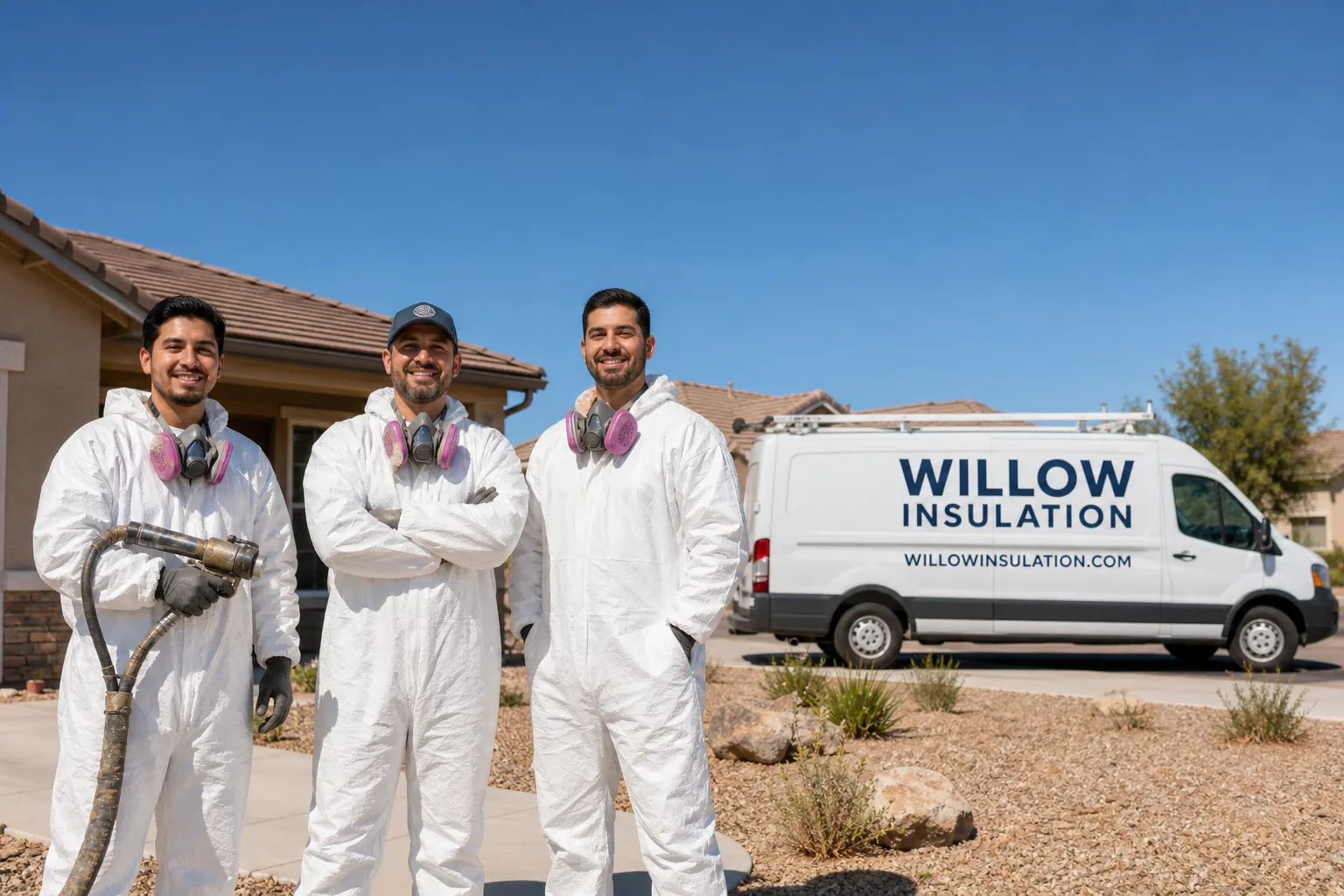
Covina homeowners call us because we show up with a portfolio of eight manufacturer brands and no reason to push one over another. That matters when your 1960s tract home needs a specific fix, not whatever happens to be in the warehouse. Our crews work on the same housing stock day after day: single-story stucco homes along Citrus Avenue, older cottages near downtown, and the newer infill up in the east hills off Badillo Street. We understand how each one fails differently.
Noel Castaneda built Willow Insulation around a simple idea: carry the right material for every job, not just the one that’s easiest to install. That means Owens Corning fiberglass for standard attic batts, GreenFiber cellulose for blown-in re-insulation, Rockwool where sound or fire resistance matters, and both Icynene and Demilec for spray foam work. Covina customers review our thoroughness and our willingness to explain the tradeoffs. You’ll get a straight answer about cost, performance, and what your specific attic actually needs.
Free estimates, honest assessments, and no pressure. Call (855) 473-6541 and we’ll schedule a look at your attic within days, not weeks.
Radiant Barrier in Covina
A radiant barrier in Covina is one of the most cost-effective upgrades a homeowner can make, because it directly attacks what makes summer attics here so brutal: radiant heat gain from a sun-blasted roof deck. The barrier is a reflective foil material stapled to the underside of the roof rafters. It blocks radiant heat from the roofing before it can heat the attic air and soak through to your ceilings. In a Covina attic that hits 140°F, a properly installed radiant barrier can drop the attic temperature by 20 to 30 degrees, which means your upstairs rooms stop fighting heat that’s coming from above.
Attic Temperature Before and After
Homes around the 91723 and 91724 ZIPs with dark composition shingle roofs gain heat fast. The shingle surface can hit 160°F in July. That heat radiates downward into the attic and then into ceiling insulation, which eventually lets it bleed into the home. A radiant barrier installed under the rafters reflects most of that heat before it ever reaches the insulation, which keeps the whole assembly cooler and helps the A/C work less.
When a Covina Homeowner Should Add One
If your upstairs bedrooms won’t cool below 80°F on a 100°F day, or if your attic feels like a sauna when you poke your head up there, a radiant barrier is a strong candidate. It pairs well with blown-in insulation but doesn’t replace it. Radiant barrier in Covina typically runs $1,800 to $3,200 for an average single-story home, depending on roof geometry and attic accessibility.
Attic Cleaning Services in Covina
Attic cleaning services in Covina often become necessary when older homes have decades of dust, pest debris, or degraded insulation that needs removal before new material goes in. Rodent activity is common in raised-foundation homes here, and the droppings and nesting material left behind in attic insulation are a health concern. Old blown-in fiberglass also holds dust, allergens, and sometimes mold from years of condensation cycles. Before we re-insulate, we remove the old material, sanitize the attic floor, and prep the space for fresh insulation.
Rodent Debris and Old Insulation Removal
Homes near the downtown Covina area with older construction are more prone to rodent entry through gaps at the foundation and roof eaves. Once in the attic, rodents nest in the insulation and contaminate it. Cleaning removes the contaminated material, allowing us to start fresh with clean, uncompromised insulation. Attic cleaning in Covina generally runs $1,200 to $2,500 depending on the size of the attic and the extent of contamination.
Straighten Up and Prep for New Insulation
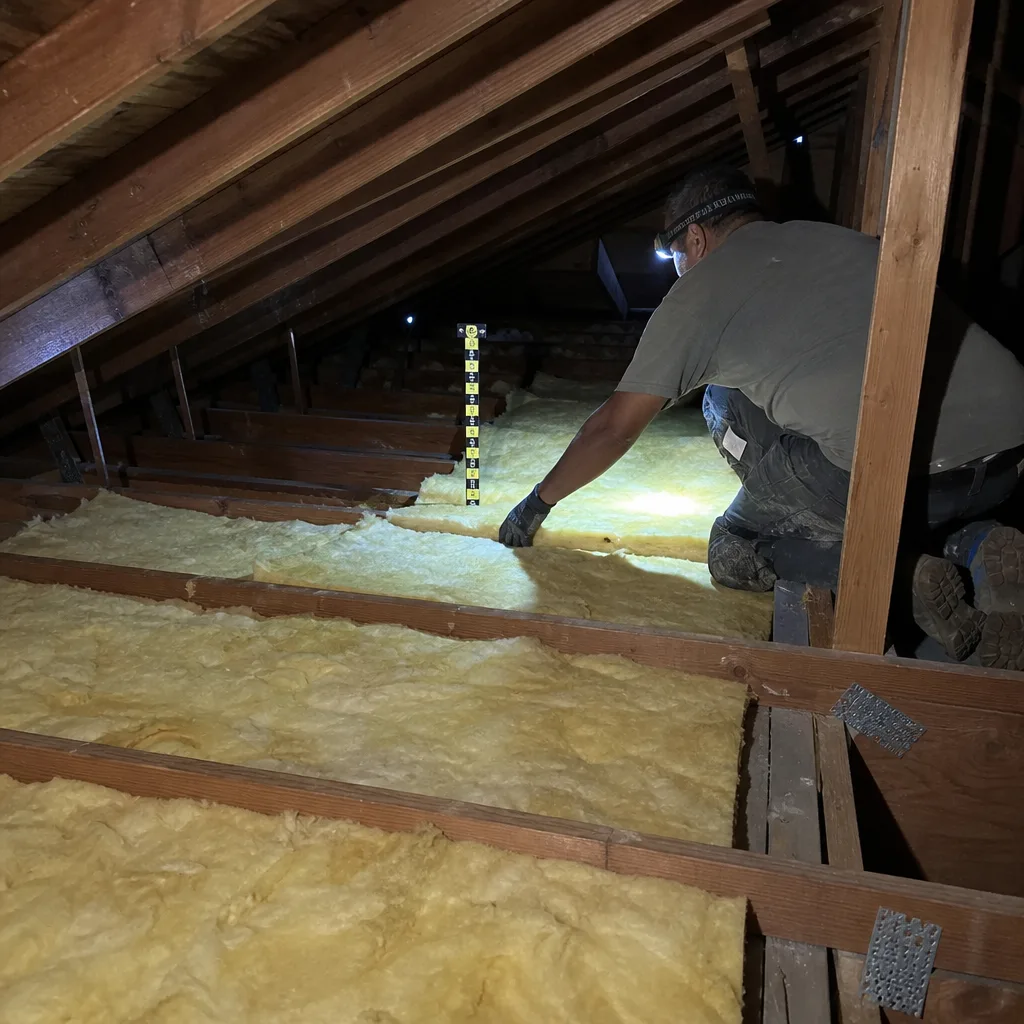
Even without pest issues, a cleaning before re-insulation lets us see the ceiling plane clearly. That’s when we find the real problems: gaps around recessed lighting, unsealed top plates, and old can lights leaking air straight into the attic. Cleaning the attic floor gives us the clear view we need to air-seal properly before we blow in new GreenFiber cellulose.
What happens when you call
- 1
A real person answersNo phone trees — you reach a local pro.
- 2
You get an upfront price rangeHonest numbers before anyone is dispatched.
- 3
A background-checked tech heads outLicensed & insured, dispatched right away.
- 4
You approve before work beginsNothing starts until you say go.
Trusted Brands We Service in Covina
We install and service Owens Corning, GreenFiber, Icynene, and Demilec systems, among others. Because we carry eight brands across fiberglass, mineral wool, spray foam, and cellulose, we stock the materials Covina jobs actually use. That means no week-long waits for a specific batt size or a particular spray foam kit. When we recommend a material, it’s because it fits your home’s construction and your summer heat problem, not because it’s what we have left on the truck. Call (855) 473-6541 to talk through what your attic needs.
Common Attic Insulation Problems We See in Covina Homes
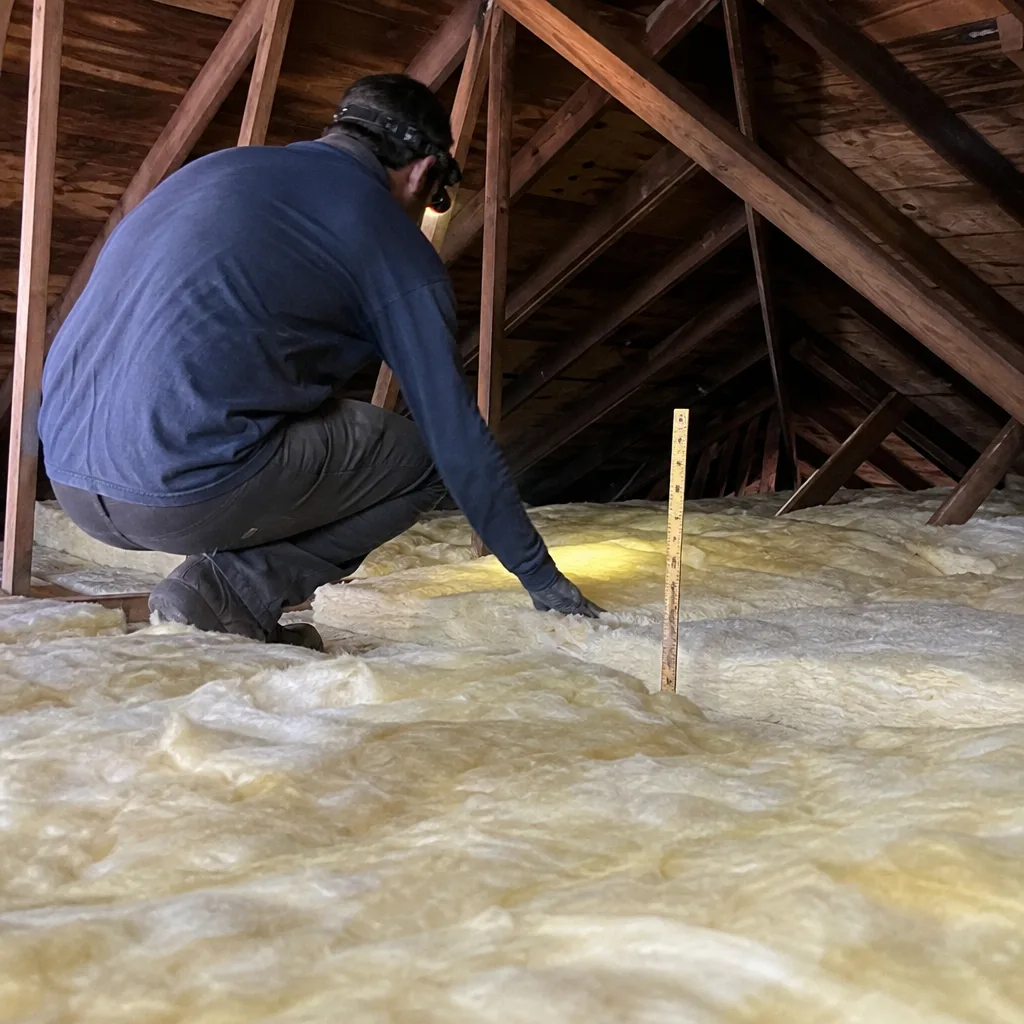
- Compacted blown-in fiberglass. In Covina’s summer heat, old blown-in insulation settles and compresses, losing up to half its R-value. The insulation you have may look thick, but if it’s been there since the 1970s, it’s not doing its job.
- Air leaks through the ceiling plane. Gaps around recessed lights, ceiling fans, and the attic access hatch let conditioned air escape into the attic. In Covina homes with raised foundations, this pulls hot exterior air upward through the house all summer.
- Sagging original batts. Heat cycling and age cause fiberglass batts to pull away from framing at the eaves and knee walls. Those uninsulated gaps around the edges of the attic are often invisible until you get up there with a flashlight.
- Vented crawlspaces undermining the attic. Homes in 91722, 91723, and 91724 with raised floors and vented crawlspaces have a second heat source below the house. Hot air rises through the floor assembly and warms the whole envelope, making attic insulation work harder than it should.
Pricing for Attic Insulation in Covina, CA
What you’ll pay depends on what your attic actually needs. A simple attic insulation top-up with blown-in GreenFiber runs $1,500 to $2,800 for a typical Covina single-story home. Full attic insulation replacement, including removal of old material, cleaning, air-sealing, and new insulation to R-38, runs $3,500 to $6,500. Radiant barrier installation adds $1,800 to $3,200. If your home has a vented crawlspace that needs under-floor insulation and a vapor barrier, expect $2,000 to $4,000 more. Every job gets a free assessment and a written, upfront price before any work starts. Call (855) 473-6541 to schedule yours.
We Also Serve Cities Near Covina
Willow Insulation works throughout the San Gabriel Valley. Beyond our Covina coverage, we handle Attic Insulation projects in Irwindale, Azusa, Citrus, and West Covina. Our crews know the local building styles and the shared climate patterns across these cities, so the same care and material-agnostic approach applies wherever your home sits.
Serving Covina, CA — Our Local Coverage Area
We’re based in the Covina area and know this community well. Use the map below to see our service coverage — if you’re nearby, we can almost certainly help.
FAQs About Attic Insulation in Covina
Covina’s summer heat drives attic temperatures to 140°F, which causes blown-in fiberglass to compact and lose up to half its rated R-value over time. Heat cycling also causes batts to sag and pull away from framing. If your insulation is original to a 1960s or 70s home, it’s likely underperforming by 50% or more. Call (855) 473-6541 for a free attic evaluation.
Because in older Covina homes, the ceiling plane leaks conditioned air through gaps around lights, fans, and framing penetrations. Insulation slows heat transfer, but it doesn’t stop air movement. If air is leaking through, adding more insulation on top is like wearing a thick coat with the zipper open. We air-seal first, then insulate.
A radiant barrier addresses radiant heat gain from the roof, while blown-in insulation addresses conductive heat transfer through the ceiling. In Covina, both matter. If your insulation is compacted and thin, add blown-in first. If your insulation is adequate but your upstairs rooms still bake, a radiant barrier may be the missing piece. We’ll assess both and tell you what’s needed.
Signs include rodent droppings or nesting in the attic, visible dust or debris in the insulation, a musty smell, uneven room temperatures, higher energy bills in summer, or insulation that looks flat and matted rather than fluffy. If your attic hasn’t been inspected in a decade, it’s worth a look. Call (855) 473-6541 and we’ll check it for free.
Yes. Under-floor insulation and a vapor barrier in a vented crawlspace stop cold air from rising through the floor in winter and reduce moisture migration, which also helps protect attic insulation from below. This is common work in Covina’s raised-foundation homes. We install under-floor batts and vapor barriers as part of a whole-envelope approach.
If your Covina attic is original to the house, it’s time for a professional assessment. We’ll show you what’s up there, explain what’s worth doing, and give you a straightforward price. Call Willow Insulation at (855) 473-6541 for a free estimate. No pressure, just honest answers from a team that works in Covina every week.
Written by Noel Castaneda, Owner at Willow Insulation, serving Covina and the San Gabriel Valley.