
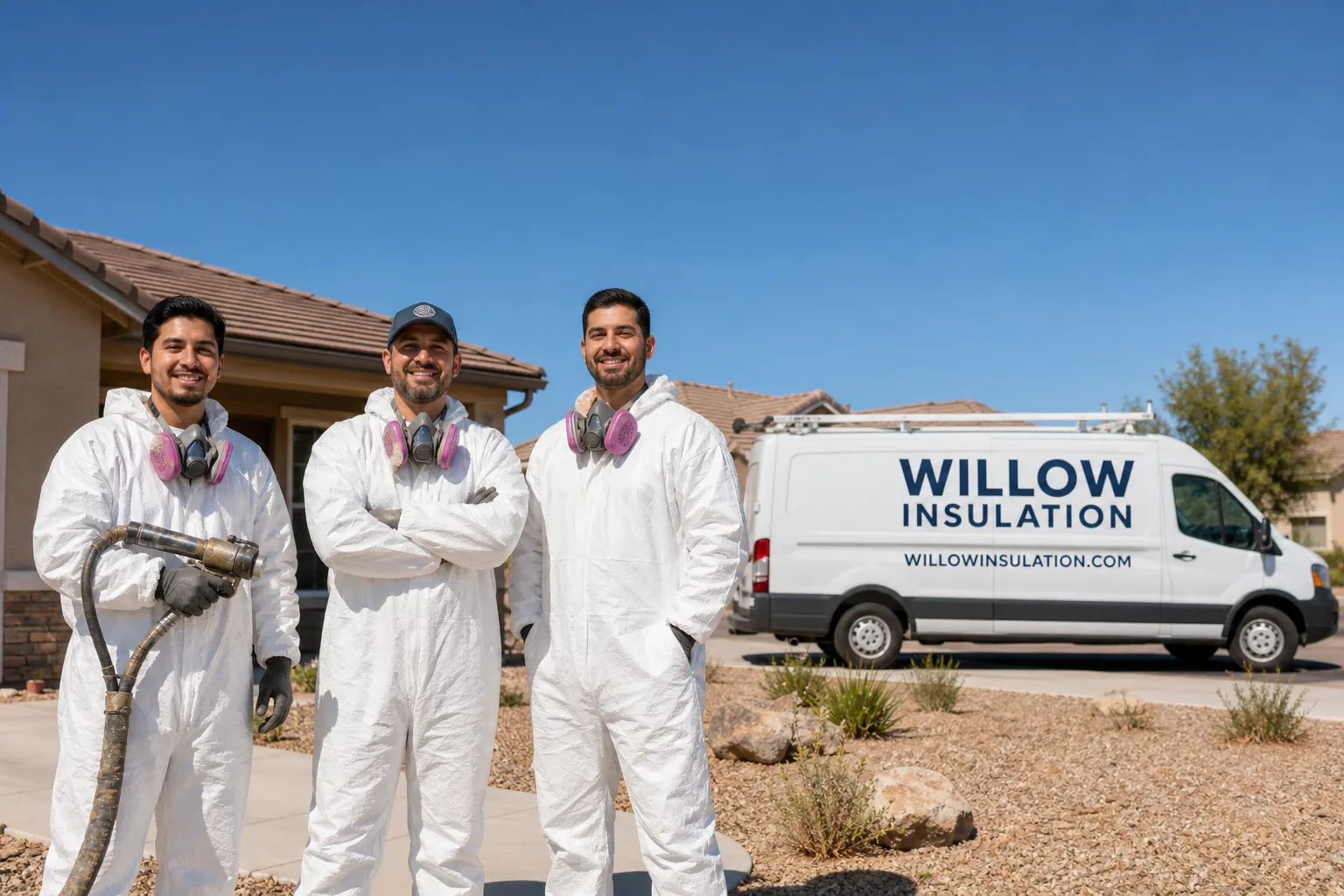
Fast, Reliable Attic Insulation Across Citrus
Attic insulation in Citrus is rarely just about adding material. In this stretch of the San Gabriel Valley, summer attic temperatures climb past 150°F, and the 1950s through 1970s ranch homes that define the 91702 corridor were built with R-11 batts that have compressed to a fraction of their original performance. What Citrus homeowners actually need is someone who understands that heat, ventilation, and old building methods interact in ways a generic insulation crew won’t catch. Our Attic Insulation team works in Citrus weekly, and we know what these attics look like after 60 years of San Gabriel Valley summers. Call (855) 473-6541 and we’ll send someone who knows the difference between a simple top-up and an attic that needs real work.
Why Willow Insulation Is Citrus’s Preferred Attic Insulation Company
Citrus homeowners call us because we treat their attics like the specific structures they are. A 1962 ranch near the railroad tracks off Citrus Avenue has different insulation needs than a 1974 tract home south of Arrow Highway, and after years of working along the 91702 corridor we’ve learned to spot the difference in the first ten minutes of an assessment. Noel Castaneda built Willow Insulation around a simple principle: carry enough material types that the recommendation always comes from the house, never from our inventory. That’s why we stock eight manufacturer brands across fiberglass, mineral wool, spray foam, and cellulose, and why we’ll tell you honestly when your attic needs removal work before adding anything new.
Our customers in Citrus regularly tell us the same thing: they’d had other contractors quote a quick blow-in without ever checking what was already up there. We take a different approach. We look at the existing batts, check for Santa Ana wind settlement, and measure what’s actually happening before recommending a fix. That’s the difference between insulation that works and insulation that just fills space.
Attic Mold Removal in Citrus
Attic mold removal in Citrus comes up more often than you’d expect in a dry climate. The heat is the problem: when daytime attic temperatures hit 150°F and nights drop into the 60s, condensation forms on the underside of the roof deck, especially in older ranch homes with limited ventilation. That moisture, trapped against old insulation and wood framing, is exactly where mold takes hold. A typical attic mold removal job in Citrus runs $1,200 – $3,800 depending on the affected area, the type of insulation involved, and whether the ventilation that caused the problem needs correction at the same time. The key point: if you remove mold but don’t fix the airflow, it returns within a season or two.
Ventilation Correction With Mold Removal
Mold doesn’t happen in a properly vented attic. In Citrus’s low-pitch ranch roofs, the original passive vents are often clogged with decades of dust, bird nesting, or simply weren’t sized correctly in the first place. When we handle a mold job, we check baffle placement, ridge and soffit vent function, and whether a powered vent makes sense for that specific roofline. Removing mold without addressing airflow is a temporary fix, and we won’t sell you one.
When Citrus Homeowners Actually Need This
You’ll usually smell it before you see it. A musty odor that gets stronger in the late afternoon heat, dark staining on the underside of the roof sheathing, or white speckling on the insulation itself. If you’ve had a roof leak repaired but the insulation was left wet, the clock is already running. We’d rather inspect early and tell you it’s fine than wait until the problem spreads through half the attic.
Attic Insulation Removal in Citrus
Attic insulation removal in Citrus is the service many homeowners don’t know they need. The original R-11 fiberglass batts installed in these 1950s and 1960s homes have compressed under decades of 150°F heat to somewhere around R-4, and that’s before you account for dust, rodent activity, or water staining. A full insulation removal and disposal for a typical 1,200 – 1,600 square foot Citrus ranch runs $1,500 – $4,200 depending on access, material type, and whether we’re also addressing contaminated areas. The honest truth: sometimes adding fresh material on top of degraded old insulation is throwing good money after bad, and the right call is a clean start.
Removal Before a Top-Up or Replacement
If your attic still has original batts from the Eisenhower or Nixon era, adding new blown-in on top doesn’t fix the compressed material below. The thermal value is already gone. We remove the old material, inspect the decking and wiring underneath, and then install fresh insulation at the correct R-value for Citrus’s climate. For most homes here, that means R-38 to R-49 in the attic floor, combined with ventilation improvements.
Santa Ana Wind Damage and Uneven Settlement
Loose-fill insulation shifts during Santa Ana wind events. The dry, static-charged air lets the material move and settle unevenly, leaving bare patches that owners never see because they rarely go up there. When we pull old loose-fill from a Citrus attic after a windy season, we consistently find areas with almost no coverage. That’s why post-heat-wave inspections in this part of the valley so often turn into removal jobs. The material isn’t just old; it has physically moved away from the areas that need it most.
Trusted Brands We Service in Citrus
We carry Owens Corning, Johns Manville, Demilec, and GreenFiber among our material lines, which means the product going into your Citrus attic is chosen for your roofline, your heat load, and your budget, not because it’s the only thing on the truck. Owens Corning blown-in fiberglass delivers reliable R-value at a sensible cost. Demilec spray foam handles tight spots where air leaks are the real problem. GreenFiber cellulose gives environmentally minded homeowners a recycled option that performs well in hot climates. Because Citrus attics run so hot, material choice matters more here than it does in coastal communities. We’ll explain what each option does in your specific situation and let you decide with full information. Noel Castaneda put this material range together specifically so Citrus customers never get steered into a product that doesn’t fit their house.
Common Attic Insulation Problems We See in Citrus Homes
- Compressed original batts. The R-11 fiberglass installed in 1950s – 1970s ranches has flattened to R-4 or worse after decades of 150°F heat. The paper facing is often brittle, and the material is no longer doing its job.
- Santa Ana wind settlement. Loose-fill insulation shifts during wind events, leaving bare spots that go unnoticed until an inspection. Homeowners often have no idea their attic has gaps.
- Room addition insulation gaps. Many Citrus homes have had additions built over the years, and the knee walls and transitions between old and new roofs are rarely sealed properly. Hot attic air bypasses the insulation entirely through these gaps.
- Undersized ventilation. The original passive vents on low-pitch ranch roofs weren’t designed for the heat load Citrus experiences. A 1958 home with two small gable vents simply cannot move enough air when attic temperatures climb past 150°F.
Pricing for Attic Insulation in Citrus, CA
Here are honest numbers for Citrus. Blown-in attic insulation on a typical 1,200 – 1,600 square foot ranch runs $1,800 – $3,400. Batt installation for the same size home runs $2,200 – $4,000. An attic insulation top-up, where we add material on top of existing insulation that’s still in decent shape, runs $900 – $1,800. Full insulation removal and replacement runs $3,000 – $6,800 depending on the condition of what’s up there and how much prep work the attic needs. Spray foam runs higher, typically $4,500 – $9,000 for a full attic application, but it solves air-sealing problems that batts and blown-in can’t. The biggest variable in Citrus is whether your existing material needs removal. Call (855) 473-6541 for a free estimate, and we’ll give you a real number based on your actual attic, not a generic square-footage guess.
We Also Serve Cities Near Citrus
While this page focuses on Attic Insulation in Citrus, our crews work throughout the neighboring communities. We serve homeowners in Azusa, Irwindale, Covina, and Glendora with the same assessment-first approach. The housing stock and heat patterns are similar across this part of the San Gabriel Valley, so the same local knowledge applies. Wherever you are in the area, the process starts with a real look at your attic, not a sales pitch.
Serving Citrus, CA — Our Local Coverage Area
We’re based in the Citrus area and know this community well. Use the map below to see our service coverage — if you’re nearby, we can almost certainly help.
FAQs About Attic Insulation in Citrus
Citrus sits in the San Gabriel Valley’s heat bowl, where summer attic temperatures routinely exceed 150°F regardless of insulation level. Insulation slows heat transfer into the living space, but it can’t stop the attic itself from getting hot. The real fix is ventilation: moving that superheated air out before it radiates downward. Many older Citrus homes have undersized passive vents that simply can’t keep up with August heat. Adding insulation without addressing airflow leaves you with a hot attic that’s better insulated, which helps, but the bigger win comes from venting. Call (855) 473-6541 for an assessment that looks at both.
The clearest sign is uneven room temperatures that appear or worsen after a heavy wind season. Santa Ana winds shift loose-fill insulation, creating bare spots that you can’t see from the access hatch. If you’re comfortable going up for a visual check, look for uneven material depth across the attic floor, with exposed drywall or thin areas near the eaves and around can lights or vents. If you’d rather not climb up there, we’ll do it. It’s a common call for us in Citrus, especially after a windy stretch, and the inspection takes about 20 minutes.
If the existing material is original to a 1950s – 1970s ranch, probably yes. Original R-11 batts in Citrus have typically compressed to R-4 or less, and adding material on top doesn’t restore what’s been lost. It just buries the problem. Removal makes sense when the old insulation is compressed, water-stained, rodent-damaged, or covered in dust. If the existing material is still in reasonable shape and just under-filled, a top-up may be appropriate. We’ll give you an honest recommendation based on what we find in your attic, not what’s easiest for us to install.
For Citrus attics, we typically recommend Owens Corning blown-in fiberglass at R-38 to R-49 for the attic floor, combined with radiant barrier where the roof faces west or south. GreenFiber cellulose is a strong alternative for homeowners who want recycled content, and it performs well in the heat when installed at proper density. Demilec spray foam makes sense for homes with room additions or knee-wall bypasses where air sealing is the priority. There’s no single right answer. The brand that works best is the one that matches your specific attic, and that’s why we carry eight lines instead of pushing one.
Yes, and it’s one of the most common issues we find. Many Citrus ranches had bedrooms or family rooms added in the 1980s and 1990s, and the transition points between the old roof and the new roof are rarely sealed. The knee walls in these additions are often uninsulated or have gaps at the top and bottom, letting hot attic air bypass whatever insulation is present. On a 1958 ranch off Arrow Highway in Citrus, our crew found knee-wall gaps from a 1980s room addition that were letting 152°F attic air flow directly into the wall cavities. Sealing those gaps plus installing a radiant barrier and R-38 blown-in dropped the attic temperature to 118°F on a 102°F day. That’s the kind of fix a quick blow-in quote never catches.
Get Your Citrus Attic Assessed
If your energy bills climb every summer, if some rooms in your Citrus home are noticeably hotter than others, or if you haven’t looked in your attic in years, let’s change that. We’ll send an insulation specialist who knows the 91702 housing stock, understands what 150°F attic heat does to old material, and will give you a straight answer about what your house actually needs. Call (855) 473-6541 for a free estimate. You’ll talk to a person, schedule a visit, and get a real assessment from a team that does one trade and does it deeply.
Written by Noel Castaneda, Owner at Willow Insulation, serving Citrus since our first job in the 91702 corridor.