
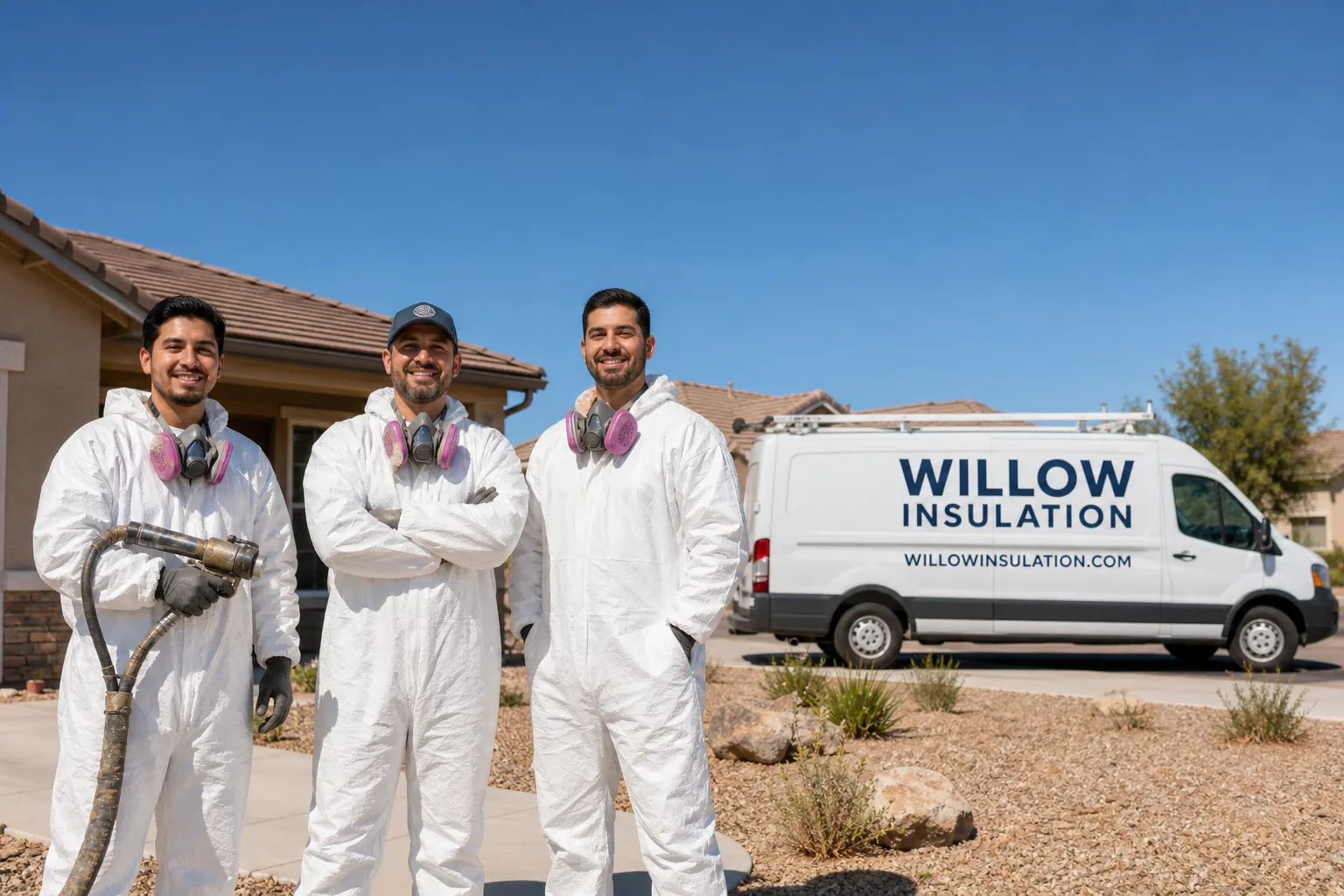
Fast, Reliable Spray Foam Insulation Across South San Jose Hills
Spray foam insulation in South San Jose Hills costs between $2,800 and $7,500 for a typical attic, with wall spray foam running $3.50 to $6.75 per square foot depending on whether you need open-cell or closed-cell. Our crew works the 91792 ZIP weekly, so we know exactly what these 1950s and 60s stucco ranches throw at an insulation contractor. If your attic is baking your home all summer, call Noel Castaneda and the Willow Insulation team at (855) 473-6541 for a free assessment.
Why Willow Insulation Is South San Jose Hills’s Preferred Spray Foam Insulation Company
South San Jose Hills sits in unincorporated LA County, which changes how a spray foam job gets permitted and inspected. We handle the County paperwork before the first pass of foam goes in, not as an afterthought when the inspector shows up. That matters here more than in nearby incorporated cities like West Covina or Walnut, where building departments operate differently. Our Spray Foam Insulation team has worked enough homes off Azusa Avenue and along the 60 corridor to know the shallow attics, the low-pitched roofs, and the venting problems that come with them.
Noel Castaneda started Willow Insulation to be the material-agnostic specialist this area needed. We do not push one foam brand because we have it in stock. We carry Icynene and Demilec, open-cell and closed-cell, so the recommendation comes from your roof cavity and your budget, not our warehouse. South San Jose Hills homeowners tell us the same thing: they want a sealed, cooler attic that does not trap moisture behind fresh foam. That is exactly what we plan for on every 91792 job.
We quote honestly. If a shallow 1960s attic needs vent baffling before foam can go in properly, we tell you that upfront. You will not find out about a second trip for re-venting after the foam is already cured.
Spray Foam Attic Insulation in South San Jose Hills
Spray foam attic insulation in South San Jose Hills means sealing the roof deck itself, not just laying batts on the attic floor. Most homes here are single-story post-war ranches with attics that hit 130°F or more during August. That heat pushes down into the living space and forces your AC to run continuously. Closed-cell foam applied to the underside of the roof deck turns that superheated attic into conditioned space. The payoff is measurable: lower summer cooling bills and bedrooms that do not feel like ovens by 4 p.m.
Closed-cell attic foam in the 91792 ZIP typically runs $3,800 to $7,500. Open-cell is less expensive, usually $2,800 to $4,800, but it does not provide the same air seal or moisture barrier on a low-pitched ranch roof. In South San Jose Hills specifically, we recommend closed-cell for most attic jobs because the roof cavities are so shallow that you need maximum R-value per inch.
Vent Rebalancing Before the Foam Goes In
South San Jose Hills ranches were built with attic vents sized for 1950s code. Those original intake and exhaust vents were never designed for a sealed roof plane. If we spray closed-cell over those vents without baffling the intake first, the cavity cannot breathe. August heat and moisture get trapped. That is how you end up with condensation problems worse than the heat you were trying to escape. Our crews baffle the eave vents first, then run foam to the deck.
Shallow Roof Cavities and County Permits
South San Jose Hills is unincorporated Los Angeles County, so a spray foam attic job here gets permitted through County channels, not a city building department. We pull that permit before foam goes in. The inspection gets scheduled into the job timeline, not bolted on at the end. That is a step many contractors who work mostly in incorporated cities forget, and it stalls jobs at final inspection. We plan for it from day one.
Spray Foam Wall Insulation in South San Jose Hills
Spray foam wall insulation in South San Jose Hills addresses what fiberglass batts in 1950s stucco walls never could. These tract homes went up fast. Wall cavities are inconsistently filled, if they are filled at all. The stucco holds the heat and the wall studs transfer it inward. Open-cell foam injected into those stud bays fills gaps, seals air leaks, and gives you a thermal barrier that original construction never provided. For homeowners who feel drafts through wall outlets on hot afternoons, this is the fix.
Wall spray foam in the 91792 area runs $3.50 to $5.25 per square foot for open-cell. Closed-cell wall foam runs $4.75 to $6.75 per square foot. For exterior walls on a typical 1,200 to 1,600 square foot ranch, expect $4,000 to $8,000 total depending on cavity access. The material we recommend depends on whether you need moisture resistance in addition to R-value. Stucco homes here do not always have a proper vapor barrier between the stucco and the studs. Closed-cell handles that.
Injecting Foam Without Gutting Drywall
Most South San Jose Hills homeowners do not want their walls torn open. We do not need to. Open-cell and closed-cell spray foam can be drilled and injected through small access holes from the interior or exterior. We patch those holes cleanly. You get a sealed cavity without a full gut job. That matters on a small-lot ranch where you are already tight on living space.
Stucco Tract Homes and the 91792 ZIP
Wall cavities in 91792 ranches are shallow, typically 2×4 construction. That limits how much insulation you can phyically fit. Closed-cell foam gives you around R-6.5 to R-7 per inch, which is the difference between a wall that stops heat and a wall that just slows it down. On an August afternoon in the San Gabriel Valley, that difference shows up on your energy bill.
Trusted Brands We Service in South San Jose Hills
Willow Insulation installs both Icynene and Demilec spray foam systems, which covers the full range of open-cell and closed-cell applications. We also carry Owens Corning fiberglass and GreenFiber cellulose for projects where foam is not the right tool. The point is simple: we are not locked into one brand, so nobody has to steer you toward the wrong material. Our work over the years in South San Jose Hills has taught us that a shallow-roof 1960s ranch calls for closed-cell, while a garage ceiling near Hacienda Heights might do fine with open-cell. You get the material that fits the job.
Common Spray Foam Insulation Problems We See in South San Jose Hills Homes
- Foam sprayed over original 1950s vents. The attic cavity gets sealed with no way to exhaust heat or moisture. We see this on ranches along Azusa Avenue where a previous contractor skipped vent rebalancing entirely. The foam works initially, then the homeowner notices musty air in August.
- Closed-cell applied to a low-pitch roof with no baffling. The eave vents that the original ranch design depended on get blocked. Air stops moving through the cavity. Heat builds up at the hottest part of the day and radiates into the ceiling.
- Skipping the unincorporated LA County permit sequence. Spray foam goes in, then the inspector shows up for final and the whole job stalls. The homeowner is stuck with cured foam and an open permit. We have fixed enough of these to know it is cheaper to pull the permit first.
- Open-cell foam on walls that needed closed-cell. Stucco tract homes with no vapor barrier between stucco and studs can trap moisture inside open-cell foam. Closed-cell is the right call on those walls. Not every contractor in South San Jose Hills explains that distinction.
Pricing for Spray Foam Insulation in South San Jose Hills, CA
Spray foam attic insulation in South San Jose Hills runs $2,800 to $7,500 depending on roof area and foam type. Wall spray foam runs $3.50 to $6.75 per square foot across the 91792 ZIP. Closed-cell costs more per board foot than open-cell but delivers higher R-value per inch, which matters when roof cavities are shallow and every inch counts. Garage ceilings, rim joists, and roof decks each have their own pricing range based on square footage and access. The variables are real: roof pitch, cavity depth, vent condition, and whether County permits need to be pulled. We walk through all of it during the free estimate, and we give you a written number before any work begins. Call (855) 473-6541 to schedule a walk-through.
We Also Serve Cities Near South San Jose Hills
Willow Insulation crews cover the whole eastern San Gabriel Valley. If you are in Valinda, Walnut, West Covina, or Rowland Heights, we are already working streets near your neighborhood. The same Spray Foam Insulation in South San Jose Hills team handles those calls too. Call (855) 473-6541 and tell us which ZIP you are in.
Serving South San Jose Hills, CA — Our Local Coverage Area
We’re based in the South San Jose Hills area and know this community well. Use the map below to see our service coverage — if you’re nearby, we can almost certainly help.
FAQs About Spray Foam Insulation in South San Jose Hills
Yes. South San Jose Hills is unincorporated LA County, so insulation work that involves sealing the roof deck is permitted and inspected through Los Angeles County building channels, not a local city department. We pull that permit before the first pass of foam goes in and schedule inspection into the job timeline. Call (855) 473-6541 and we will handle the paperwork.
It can if the contractor foams over the original intake and exhaust vents without installing baffles first. Those 1950s-size vents were not designed for a sealed roof plane. We baffle the eave intakes before running closed-cell, so the cavity can still exhaust heat and moisture. That step is standard on every shallow-attic home we spray in the 91792 ZIP.
Yes. Wall spray foam is one of our most common jobs in South San Jose Hills. We inject open-cell or closed-cell into existing stud cavities through small access holes, then patch cleanly. Stucco tract homes with no vapor barrier under the stucco typically get closed-cell for moisture resistance. Call (855) 473-6541 for a wall cavity assessment.
Because South San Jose Hills sits in the inland San Gabriel Valley, where long dry summers push attic temps past 130°F. Most of your energy bill goes to cooling, not heating. Sealing the roof deck with closed-cell foam stops that superheated attic air from radiating into living space. In this climate, cooling-season performance is the whole game.
We install both Icynene and Demilec, covering open-cell and closed-cell applications. That dual capability means the foam type is driven by the project, not by what we have on the truck. For most shallow-roof ranches here, we recommend Icynene closed-cell; for wall cavities in stucco homes, Demilec closed-cell is often the better moisture-rated fit. Call (855) 473-6541 and we will walk you through the choice for your specific roof and walls.
Written by Noel Castaneda, Owner at Willow Insulation, serving South San Jose Hills and the eastern San Gabriel Valley.