Attic Insulation in Running Springs, CA: What It Costs and What It Fixes
Attic insulation in Running Springs typically runs $1,800 – $4,600 for a full retrofit, but the real cost depends on what kind of roof cavity you have. Most cabins up here were built as 1960s – 1980s vacation homes with vaulted exposed-beam ceilings and no real attic floor to blow loose fill onto. That means the work is often dense-packing rafter bays or cutting in rigid foam from below, not the simple blow-in job flatland crews are used to. The payoff, though, is immediate: rooms hold heat through January freezes, snow melts evenly off the roof instead of refreezing at the eaves, and those icicle daggers along the gutter line finally go away. Call Willow Insulation at (855) 473-6541 for a free estimate tailored to your cabin’s actual construction.
Fast, Reliable Attic Insulation Across Running Springs
We’ve spent a lot of time crawling through Running Springs cabins, and every job starts with the same question: does this house even have an attic we can access? Up here at roughly 6,000 feet, the answer is often no, not in the conventional sense. You have A-frames off Keller Peak Road, chalets along Highway 18, ranch cabins tucked around Smiley Park, and almost all of them carry the same 1960s – 1980s DNA: vaulted ceilings, exposed beams, single-pane windows, and insulation that was thin the day it went in. Our crews know the difference between a 1972 A-frame rafter bay and a 1985 chalet ceiling cavity, and we bring the right material for each. Call (855) 473-6541 and we’ll schedule a look at what’s actually between your roof and your living space.
Why Willow Insulation Is Running Springs’s Preferred Attic Insulation Company
Willow Insulation carries eight manufacturer lines, including Owens Corning, Johns Manville, GreenFiber, and Demilec, so the recommendation you get is driven by your cabin’s structure, not by whatever we have stacked in the warehouse. That matters in Running Springs because a blown-in cellulose job on a flat attic floor is a completely different animal from dense-packing mineral wool into a vaulted A-frame ceiling. We do both, plus closed-cell spray foam for the really tight rafter bays. Our team, led by Noel Castaneda, has worked enough of these mountain cabins to know when a simple top-up will fix the problem and when the old batts need to come out entirely. If you want a straight answer on what your place needs, call (855) 473-6541.
Attic Cleaning Services in Running Springs
Attic Cleaning Services in Running Springs usually means one of two things: clearing out the actual attic floor in the handful of local homes that have one, or more often, pulling damaged insulation and decades of rodent debris, dust, and old fiberglass out of the rafter bays and ceiling cavities in a vaulted cabin. The mountain climate makes this more urgent than down the hill. Freeze-thaw cycles push moisture into old insulation, and when fiberglass from the 1970s gets damp it compresses, traps mold, and stops doing its job. Raccoons and squirrels find their way into vaulted cavities through gable vents and eave gaps, leaving nests that hold moisture against wood. A proper cleaning in Running Springs runs $400 – $1,200 depending on access and how much material has to come out.
What We Remove and Why It Matters
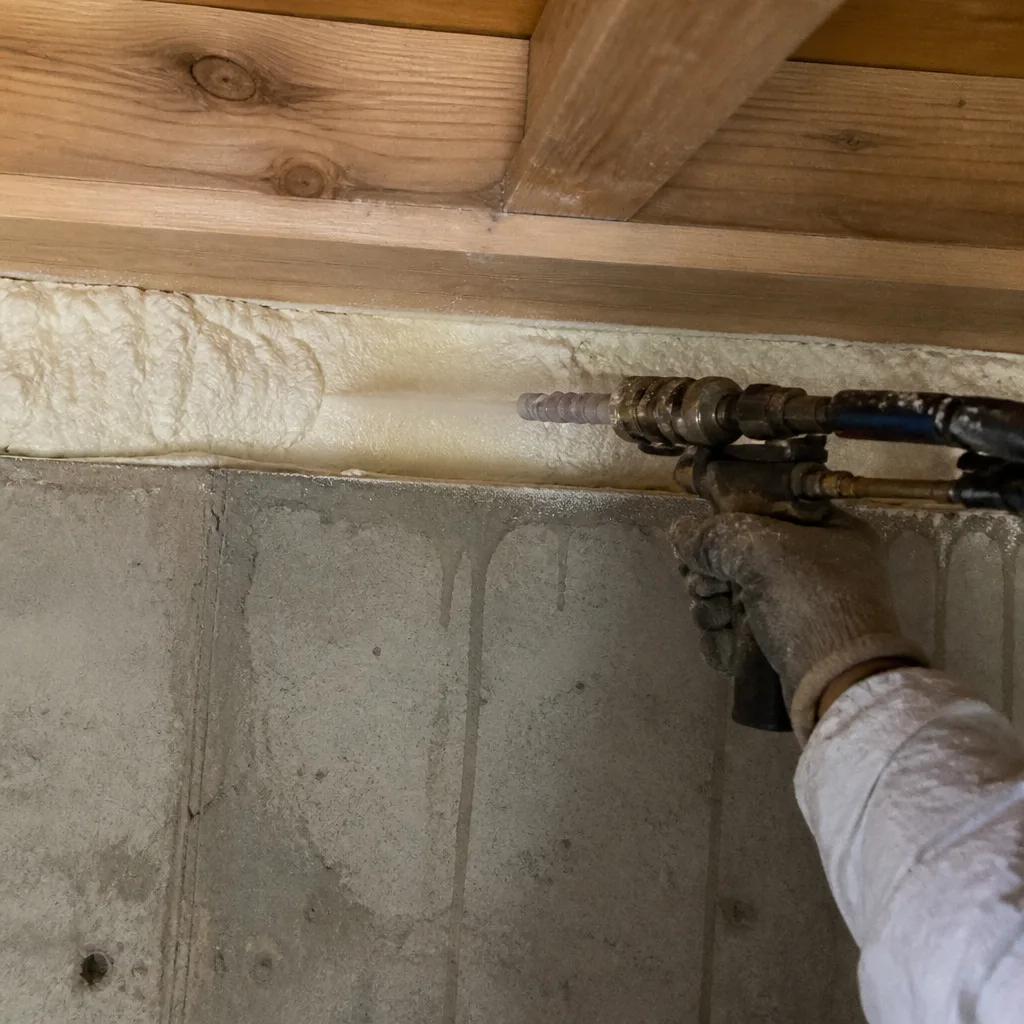
Old batt insulation in snow-country cabins sags and holds moisture from condensation cycles. When we clean a Running Springs ceiling cavity, we pull the failed material, vacuum the debris, and leave the space ready for new installation. Skipping this step means installing new insulation over moldy, compressed old stock, which is a waste of material.
Air Leak and Debris Assessment
Cleaning is also when we find the air leaks that cause eave icicles. Beam penetrations, can-light boxes, and chimney chases all leak warm air into the roof assembly. We identify them during the cleaning pass and seal them before any new insulation goes in.
What happens when you call
- 1
A real person answersNo phone trees — you reach a local pro.
- 2
You get an upfront price rangeHonest numbers before anyone is dispatched.
- 3
A background-checked tech heads outLicensed & insured, dispatched right away.
- 4
You approve before work beginsNothing starts until you say go.
Attic Mold Removal in Running Springs
Attic Mold Removal in Running Springs is a direct consequence of how these cabins were built. Warm interior air rises through beam penetrations and single-pane window headers, hits the cold underside of the roof sheathing, condenses, and feeds mold on wood and insulation. The same freeze-thaw cycle that produces icicles also keeps roof framing damp for weeks at a stretch. Mold removal here typically costs $600 – $1,800 depending on square footage and whether the affected insulation can be treated or must be replaced. In most vaulted Running Springs ceilings, the moldy batt has to come out, which is why we often pair removal with an Attic Insulation upgrade in the same pass.
Why Snow Country Mold Persists
Mold in a mountain cabin attic or ceiling cavity will come back if you only kill the surface growth and don’t fix the moisture source. The source is usually warm air leaking from the living space below. We address the air sealing alongside the mold remediation, which is the only way to break the cycle.
Replacement Options After Remediation
Once the mold is treated and the cavity is clean, we rebuild the assembly. Rockwool works well in Running Springs because it doesn’t hold moisture the way fiberglass does, and it adds real fire resistance, which matters in a wildfire-prone zone. GreenFiber cellulose is another good dense-pack option for closed cavities.
Trusted Brands We Service in Running Springs
Running Springs homeowners ask us to work with specific materials all the time. We install Owens Corning and Johns Manville fiberglass systems where a conventional attic floor exists, Demilec closed-cell spray foam for tight A-frame rafter bays where every inch counts, and GreenFiber cellulose for dense-packing closed cavities or topping up an accessible attic. We also carry Rockwool mineral wool for the fire-resistance and moisture-tolerance demands of mountain construction. Because we stock materials across all eight brands, we can usually start a Running Springs job within days of the estimate, not weeks. Let Noel and the crew know what you’re dealing with and we’ll bring the right product on the first truck.
Common Attic Insulation Problems We See in Running Springs Homes
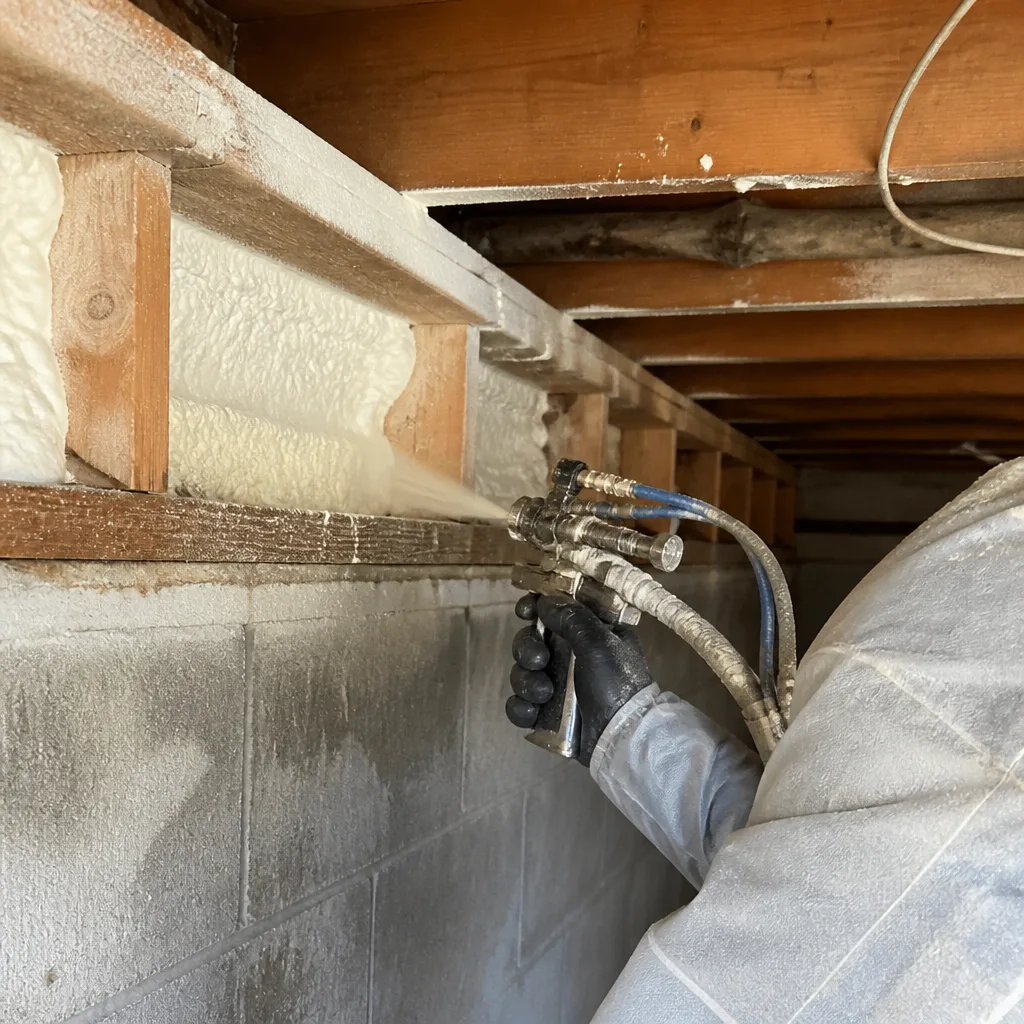
- Vaulted ceilings with almost no cavity. A-frame and chalet roofs leave only 2×6 or 4×6 rafter bays to work with, so standard blown-in loose fill doesn’t apply. We dense-pack or spray closed-cell foam from below, which is the only way to reach an effective R-value without a ceiling rebuild.
- Original 1960s – 1980s fiberglass that’s failed. Those cabins were built as vacation homes when insulation was an afterthought. The batts have sagged, absorbed condensation, and in many cases turned into a sponge that feeds mold through every winter.
- Eave icicles and ice dams from air leaks. Warm air escaping at beam penetrations and wall junctions melts roof snow, which refreezes at the eaves. Insulation alone won’t stop that; it takes air sealing in the same pass.
- Wildfire exposure concerns. Running Springs sits in a steep, fire-prone mountain zone. Ember-resistant venting detail and non-combustible insulation choices like Rockwool make a real difference in how a cabin holds up during ember storms.
Pricing for Attic Insulation in Running Springs, CA
Here’s what we see in the 92382 area. A straightforward attic top-up with blown-in GreenFiber or fiberglass on an existing attic floor runs $1,200 – $2,400. Dense-packing a vaulted ceiling from below starts around $2,800 and goes to $5,000 depending on access and rafter depth. Closed-cell spray foam is the premium option at $4,500 – $8,000 for a typical Running Springs A-frame, because it delivers the highest R-value per inch, which matters when your rafter bays are only 5.5 inches deep. Attic cleaning adds $400 – $1,200 and mold removal adds $600 – $1,800. We give free estimates, and the price we quote is the price you pay. Call (855) 473-6541 for exact numbers on your place.
Attic Insulation and Running Springs’s Real Challenge: Vaulted Cabins Without Attics
Running Springs’s cabin stock was largely built as 1960s – 1980s vacation homes with vaulted exposed-beam ceilings and no real attic cavity. That single fact changes everything about how attic insulation gets done here. On a flatland tract house, you blow loose fill across the attic floor and call it a day. On a Running Springs A-frame, there is no attic floor. The roof deck is the ceiling, and the only insulation cavity is the rafter bay itself. So attic insulation here often means dense-packing rafter bays from below with Rockwool or GreenFiber, or cutting in rigid foam and spraying closed-cell foam into the tightest spots. The payoff is stopping the eave icicles and ice dams that form when that thin roof leaks heat into snow at roughly 6,000 feet. We’ve been doing this work across Running Springs long enough to know that a cabin built in 1974 off Highway 18 needs a different approach than a 1980s place near the Arrowbear area, and we plan each job around the actual framing, not a generic formula.
Up in the Smiley Park area off Keller Peak Road, we opened a 1970s A-frame whose vaulted ceiling had only a thin layer of failing fiberglass batt wedged between the exposed rafters, with icicles hanging off the eave line every winter. We dense-packed Rockwool and GreenFiber into the tight rafter bays from below and air-sealed the beam penetrations, then pulled the soggy old batts out as part of an attic cleaning. The owners reported the roof snow finally melting evenly instead of refreezing at the eaves.
We Also Serve Cities Near Running Springs
Willow Insulation works throughout the San Bernardino Mountains. We cover Attic Insulation in Running Springs plus the surrounding communities of Lake Arrowhead, Highland, Mentone, and Crestline. If you’re up or down the mountain and dealing with the same vaulted-ceiling problems, we’ll come take a look.
Serving Running Springs, CA — Our Local Coverage Area
We’re based in the Running Springs area and know this community well. Use the map below to see our service coverage — if you’re nearby, we can almost certainly help.
FAQs About Attic Insulation in Running Springs
Yes. Dense-packing from below or spraying closed-cell foam into the rafter bays are the two standard methods for vaulted Running Springs ceilings. We remove the old batt if it’s failed, air-seal the beam penetrations, then install Rockwool, GreenFiber, or Demilec foam depending on rafter depth and your budget. Call (855) 473-6541 and we’ll tell you which method fits your A-frame.
Icicles form when warm air leaks through beam penetrations, can lights, or wall junctions, melts the snow on the roof, and the water refreezes at the colder eave edge. Insulation slows conduction but doesn’t stop air leakage. You need air sealing in the same pass. That’s standard practice on our Running Springs jobs.
Typically, we remove the old thin batt or whatever is up there, clean the cavity, air-seal all the leak points, and then dense-pack or spray foam the rafter bays. The entire process for a small Running Springs cabin takes one to three days depending on access and whether mold remediation is needed. Call (855) 473-6541 for a walkthrough and an exact plan.
It should. We recommend Rockwool mineral wool in Running Springs roof assemblies because it’s non-combustible, unlike fiberglass and cellulose, and it holds its shape under fire exposure. We also pair insulation work with ember-resistant vent and eave detailing so the work supports the whole building envelope.
Not if the moisture source is fixed. In Running Springs, that source is almost always warm air leaking from the living space into the cold roof assembly. We treat the mold, remove damaged insulation, seal the leaks, and re-insulate. Done that way, mold doesn’t return. Call (855) 473-6541 for an assessment.
Written by Noel Castaneda, Owner at Willow Insulation, serving Running Springs and the San Bernardino Mountains.