Fast, Reliable Attic Insulation Across Monrovia
Attic insulation in Monrovia usually costs between $1,800 and $5,400 for a full retrofit on a typical 1,200 to 1,800-square-foot home, though hillside properties with WUI requirements or legacy-material removal often land higher. Most Monrovia jobs wrap in one to two days, and our crew reaches every corner of 91016 and 91017, from the flatlands near Duarte Road to the steep streets above Hillcrest. We stock the materials needed for both flatland tract homes and foothill bungalows, so you’re not waiting on a distributor in Irwindale to ship your batts. Call us at (855) 473-6541 and we’ll schedule an attic assessment that accounts for your specific block, your home’s decade, and what’s actually going on up there.
Why Monrovia Homeowners Call Willow Insulation for Attic Work
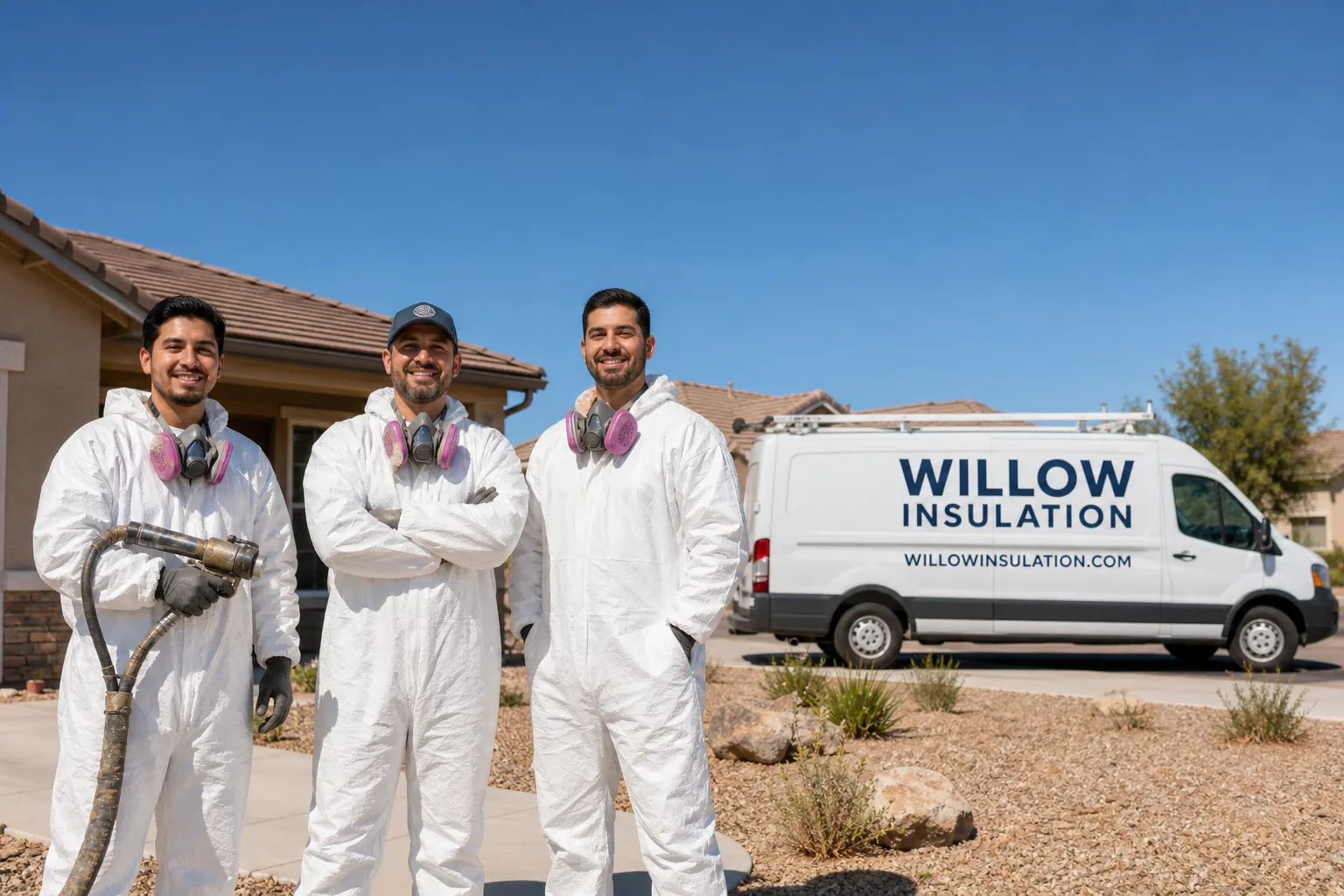
We’ve spent enough days in Monrovia attics to know the housing stock on a block-by-block basis. A 1926 Craftsman bungalow off Myrtle Avenue near Old Town needs a fundamentally different approach than a 1978 tract house south of Foothill. Our Attic Insulation team works with every major insulation material, which means we’re not trying to force fiberglass batts into a hillside Spanish bungalow that really needs Rockwool and air-sealing. The recommendation is driven by your home’s construction, elevation, and exposure, not by what’s stacked in our warehouse. Noel Castaneda started Willow Insulation around a simple principle: carry more material lines than anyone else in the trade, so the homeowner gets an honest choice.
Monrovia customers consistently tell us the same thing: they’d lived with a hot upstairs and a cold living room for years and assumed it was just how old houses behaved. It isn’t. A properly insulated attic changes how a 1920s bungalow holds temperature, and we’ve done enough retrofits in the neighborhoods north of Foothill Blvd to know exactly what that change looks like in a balloon-frame home. We reach Monrovia fast from our Victorville base, typically scheduling assessments within the week and full installs within two to three weeks depending on material lead times. For the fastest scheduling, call (855) 473-6541 and ask for the Monrovia queue.
Attic Insulation Removal in Monrovia
Attic Insulation Removal in Monrovia is the first step on most pre-1960 homes and many hillside properties. The job involves pulling out whatever’s up there now, whether that’s stale newspaper insulation in a balloon-frame bungalow, rodent-damaged fiberglass in a mid-century ranch, or fire-degraded batts near the chaparral line, and then prepping the attic for new material. Removal typically runs $1.20 to $2.10 per square foot in Monrovia, so a 1,400-square-foot attic usually lands between $1,700 and $2,900 depending on access, debris condition, and whether we’re also clearing old wiring or HVAC remnants.
Why Removal Precedes Every Foothill Retrofit
In hillside neighborhoods like those north of Hillcrest Boulevard, old insulation has often been pulling in dust and fine debris from the San Gabriel Mountains for decades. You can’t simply layer new batts on top of that and call it done. Removing the legacy material first gives us access to seal top plates and inspect the venting, both of which matter more when your attic breathes directly off a chaparral slope.
When Flatland Homes Still Need a Full Removal
Even in the flatter parts of Monrovia near the 210, homes built between 1910 and 1940 often have insulation that’s settled to half its original R-value, or worse, been torn up by rodents nesting in the eave spaces. Removal there isn’t a luxury; it’s the only way to reset the attic to a known baseline before new insulation goes in.
Insulation Contractors in Monrovia
Insulation Contractors in Monrovia are not all set up the same way, and that matters if you live in a hillside home where WUI detailing and ember-resistant vent screening are part of the job. We’re a single specialized crew, not a general contractor subbing out the insulation line. When we assess your attic, we’re looking at the whole assembly: vent placement, top plates, existing R-value, air leakage, and what the fire-season wind pattern at your specific elevation means for material choice. Hiring us for your Monrovia attic means you’re getting a materials-agnostic specialist, not someone who only knows one product line.
What to Expect on Assessment Day
We’ll walk the attic, measure depth with a ruler in at least six spots, check vent screens and baffles, and note any air pathways that need sealing before insulation goes in. Our reports are specific: what’s up there now, what R-value it’s actually delivering, and what we’d do differently based on your home’s elevation and construction type.
Brands On Hand for Monrovia’s Housing Mix
Because Monrovia spans 1920s bungalows, mid-century ranches, and 1980s tract homes, we keep batts from Owens Corning, spray foam systems from Icynene and Demilec, and GreenFiber cellulose on the roster. That means we’re not trying to sell you the wrong material just because the distributor shipped us a full pallet last month. The home dictates the material, not the other way around.
Trusted Brands We Service in Monrovia
Monrovia homeowners ask us all the time which insulation brand we prefer, and the honest answer is: it depends on the house. We carry and install Owens Corning fiberglass for standard attic retrofits where budget and availability matter, Rockwool for hillside and fire-adjacent homes where stone wool’s fire resistance earns its keep, Icynene and Demilec spray foam for cathedral ceilings and tight cavities, and GreenFiber blown-in cellulose for homeowners who want a recycled-content option on attic floors. That breadth is uncommon among Monrovia insulation contractors, and it’s the reason our recommendations are project-driven rather than inventory-driven. Call (855) 473-6541 and we’ll tell you which material fits your attic, not which one we’re pushing this quarter.
Common Attic Insulation Problems We See in Monrovia Homes
- Balloon-frame air leakage in Old Town bungalows. Homes built between 1910 and the 1930s near Old Town Monrovia usually have open wall cavities running from crawlspace to attic. That means attic air escapes through unsealed top plates, and any new insulation you add won’t perform until those gaps are sealed.
- Chaparral-drawn vents in foothill homes. On the hillside streets north of Foothill Blvd, attic vents often pull air directly off the brush-covered slopes. That’s a WUI compliance issue and a fire-safety concern, and it degrades insulation over time as fine debris accumulates. Ember-resistant vent screening is a standard part of our upgraded foothill retrofits.
- Santa Ana wind-washing in flatland tract homes. In the 1960s through 1980s tracts south of the 210, we regularly find thin, settled batts that have been wind-washed by repeated Santa Ana events. The insulation looks fine from the hatch, but its R-value has collapsed where the wind entered along the eave line.
- Compressed or displaced batts around HVAC equipment. Monrovia attics with an HVAC air handler or ductwork running through the floor often show batts crushed to half their rated thickness in the service area. Fixing that is usually a question of insulation replacement plus re-baffling around the equipment, not just topping up depth.
Pricing for Attic Insulation in Monrovia, CA
A full attic insulation retrofit in Monrovia typically runs $1,800 to $5,400, with legacy-material removal adding $1.20 to $2.10 per square foot as noted above. Blown-in cellulose or fiberglass on a simple flatland attic starts on the lower end of that range. Rockwool batts in a hillside bungalow, especially one that needs ember-resistant vent screening and WUI-compliant detailing, lands closer to the top. What drives that spread here is not material cost alone. It’s access, attic geometry, the age of the house, and what’s already up there. A tight 1920s attic with a low ceiling and legacy debris costs more per square foot to do right than a wide-open 1987 tract attic. Call (855) 473-6541 and we’ll give you a specific number for your house, not a range. Estimates are free, and no one will pressure you into a material that isn’t right for the structure.
We Also Serve Cities Near Monrovia
Our attic insulation crew regularly works in the communities that border Monrovia, including Mayflower Village, Duarte, Bradbury, and Arcadia. Each has its own mix of housing stock, but Monrovia is the focus of this page because of its unusual foothill-to-flatland gradient. If you live just over the border, we’ll still come out, assess honestly, and quote the same way. Learn more on our Attic Insulation in Monrovia page or call us for a fast answer.
Serving Monrovia, CA — Our Local Coverage Area
We’re based in the Monrovia area and know this community well. Use the map below to see our service coverage — if you’re nearby, we can almost certainly help.
FAQs About Attic Insulation in Monrovia
Yes. Homes in the Wildland-Urban Interface zones north of Foothill Blvd are subject to WUI requirements that flatland parts of 91016 never encounter. That typically means ember-resistant vent screening, and it often pushes us toward Rockwool’s fire resistance over standard fiberglass. We handle WUI-compliant insulation detailing as a routine part of foothill retrofits, not an add-on you’ll discover halfway through.
Because the existing material in those attics is almost always either absent, compressed, or contaminated by rodents, dust, and decades of air leakage through balloon-frame cavities. You can’t seal the top plates properly while old newspaper insulation is still covering them. Removal costs $1.20 to $2.10 per square foot in Monrovia and gives us the access needed to air-seal before new insulation goes in. Call (855) 473-6541 and we’ll quote your removal as a separate, transparent line item.
The neighborhoods at the base of the San Gabriel Mountains run hotter in summer and colder on winter nights than the flatland streets south of Hillcrest. A house off North Primrose Avenue at the upper edge of the city can see attic temperatures 10 to 15 degrees higher than the same attic design near Huntington Drive. That shift in thermal load and wind exposure changes what R-value we spec and what material we recommend. It’s why we won’t quote your Monrovia attic over the phone without first looking at exactly where you sit on the slope.
We install Owens Corning fiberglass, Rockwool mineral wool, Icynene and Demilec spray foam, and GreenFiber blown-in cellulose. Which one applies depends on your home’s construction, elevation, and exposure. A flatland tract house usually gets Owens Corning batts or GreenFiber blown-in. A hillside bungalow near the brush line is often better served by Rockwool with ember-resistant vent screening. We carry all of them so we can install the right one, not the convenient one.
Choose removal when the existing insulation is compressed, moisture-damaged, rodent-contaminated, or sitting in an attic where you need access to air-seal top plates and upgrade venting. That covers most pre-1960 Monrovia homes. Adding more on top makes sense only when the existing batts are dry, intact, and at least partially performing, which we mostly see in 1990s-and-newer construction. If you’re not sure, we’ll tell you honestly during the assessment. Call (855) 473-6541 to schedule one; there’s no charge for looking.
Written by Noel Castaneda, Owner at Willow Insulation, serving Monrovia and the surrounding foothill communities since 2019.