
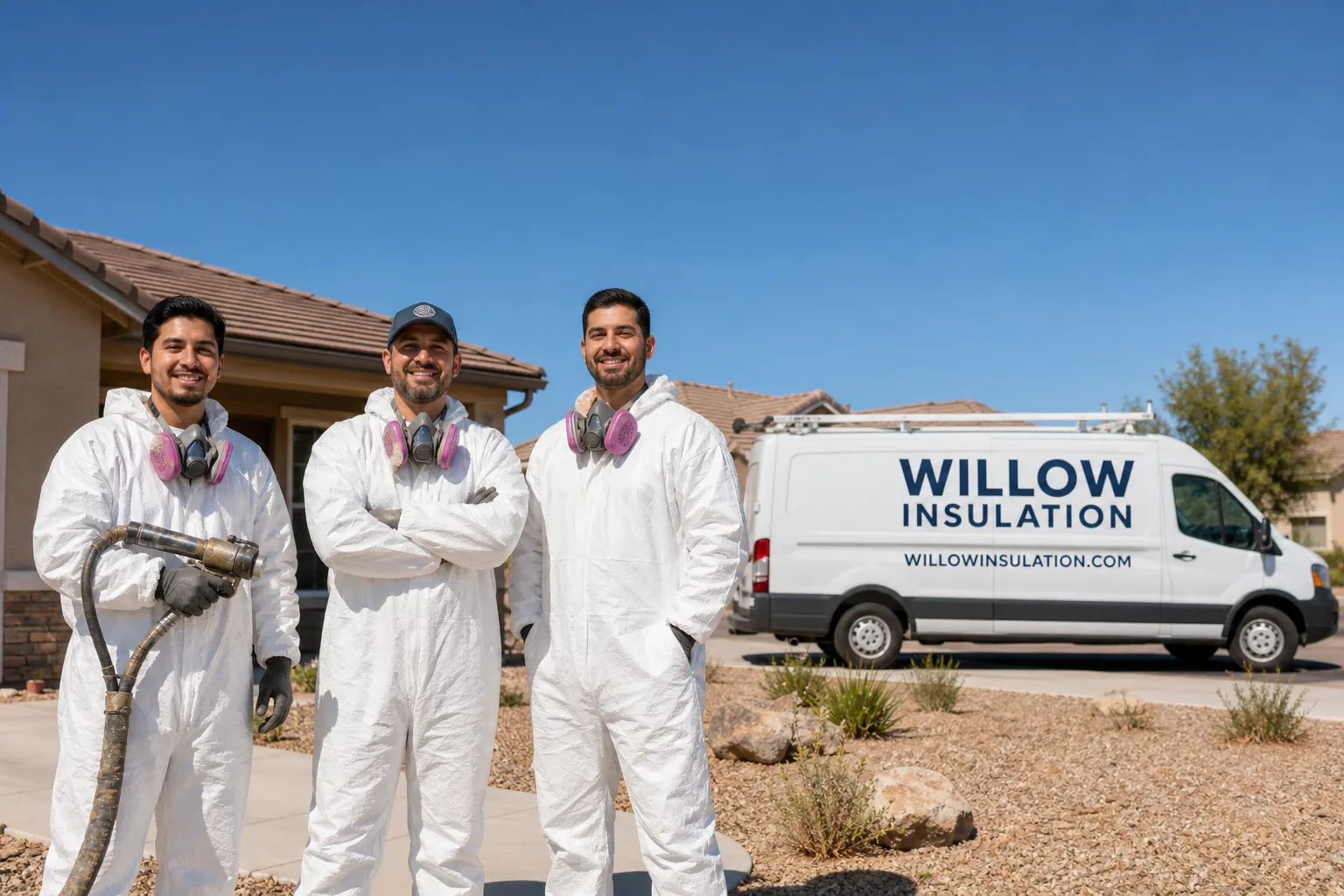
Fast, Reliable Attic Insulation Across Corona
Most attics in Corona don’t have an insulation problem you can see from the living room. They have one you feel: upstairs bedrooms that never cool down in August, a furnace that runs constantly in January, and energy bills that climb every year while the house stays uncomfortable. That’s what we fix. Willow Insulation has worked in Corona’s tract neighborhoods and older ranch streets long enough to know what’s actually happening above the drywall, and we’ll give you a straight answer on what needs to change. Call us at (855) 473-6541 and we’ll schedule a free attic assessment in Corona, usually within a few days depending on the season.
Why Willow Insulation Is Corona’s Preferred Attic Insulation Company
We’re not a general contractor who does insulation on the side. We’re an insulation specialist that carries eight manufacturer brands including Owens Corning, Johns Manville, GreenFiber, and Demilec, so the recommendation you get is driven by what your Corona attic actually needs, not by what we happen to have stacked in a warehouse. We also handle Reflectix repair in Corona when reflective barriers need attention. That’s the whole point of what we do. If your 1980s tract home in 92879 needs a blown-in top-up over compressed fiberglass, we’ll tell you that. If an older ranch near the 91 freeway corridor needs air-sealing and a radiant barrier before we touch the insulation depth, we’ll tell you that too.
Our team has spent enough time in Corona attics to recognize the failure patterns before we even climb the ladder. Homes off McKinley Street, neighborhoods near Eagle Glen, the older single-story streets south of Ontario Avenue, all of them tend to show the same thing: original R-11 or R-13 batts flattened by years of heat cycling, dust from the Santa Ana winds settled into every gap, and top plates left bare while the homeowner wonders why the AC never shuts off. Knowing the housing stock means we can quote accurately and fix the real problem the first time.
Noel Castaneda built Willow Insulation on a simple principle: fit the solution to the house, not the house to a product. That matters in Corona because the right answer for a 92881 foothills tract home is often different from the right answer for a 1960s single-story ranch off the 91. We work across fiberglass, mineral wool, spray foam, and cellulose specifically so we never have to steer a homeowner toward the wrong material.
When you call Willow Insulation for Attic Insulation work in Corona, you get a specialist who knows the difference between a ventilation problem and an insulation problem, and who can fix either one without selling you something you don’t need.
Radiant Barrier in Corona
Radiant Barrier in Corona is not a luxury add-on for most homes here, it’s a direct countermeasure to attic temperatures that regularly climb past 160°F from May through October. A radiant barrier is a reflective material installed under the roof deck that bounces radiant heat back out instead of letting it soak into the attic and then into your living space. In Corona’s inland climate, where summer sun hits hard and the Santa Ana winds don’t cool anything down, that reflection alone can cut attic temperatures by 20 to 30 degrees, which takes real strain off your HVAC system. For a typical Corona home, installing a radiant barrier runs $1,500 to $3,200 depending on attic size and accessibility, and we strongly recommend pairing it with air-sealing whenever there are visible gaps at top plates, can lights, or plumbing penetrations.
Why Older Corona Ranches Benefit Most
Single-story ranch homes near the 91 freeway corridor often have minimal attic ventilation and no radiant barrier at all, which means the insulation that is up there has been cooking for decades. The roof deck absorbs direct sun all afternoon, the heat radiates down into the insulation, and the attic turns into an oven that eventually saturates the ceiling below. Adding a radiant barrier plus proper baffle ventilation gives that heat a way out instead of a way in.
Pairing Radiant Barrier With a Blow-In Top-Up
We rarely recommend a radiant barrier as a standalone fix in Corona. The homes that need it most, 1980s and 1990s tract houses in 92879 and 92881, also have original fiberglass batts compressed to half their intended depth. The standard job here is air-sealing first, then a blow-in cellulose top-up over the old batts, then the radiant barrier under the deck. That combination addresses heat gain, air leakage, and insulation depth in one pass, and it’s the most cost-effective upgrade path for this housing stock.
Attic Cleaning Services in Corona
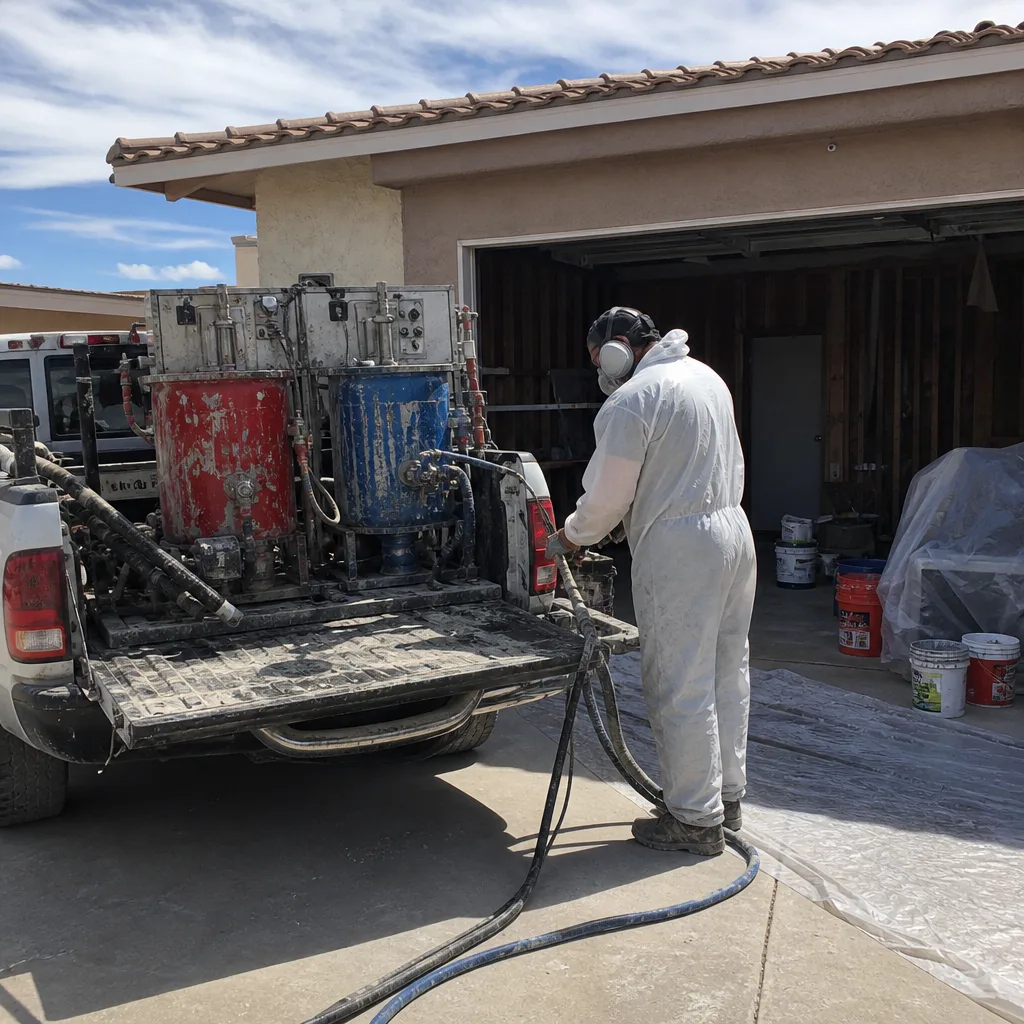
Attic Cleaning Services in Corona are the step most homeowners skip, and it’s the step that makes the biggest difference in how long new insulation actually performs. In this part of the Inland Empire, Santa Ana winds drive fine hill dust through soffit vents, gable vents, and every small gap in the attic floor. Over 20 or 30 years, that dust settles into the fiberglass batts, compresses them, and creates the exact conditions we see in tract homes across 92879, 92883, and 92878. Cleaning the attic before adding insulation means removing the dust load, inspecting the top plates and penetrations, and giving the air-sealing crew a clean surface to work with. Attic cleaning in Corona typically runs $700 to $1,800 depending on the size of the attic and whether there’s old rodent activity, water staining, or blown-in material that needs removal.
What a Corona Attic Cleanout Actually Involves
We remove old insulation, vacuum out the dust and debris, and inspect every top plate, wire penetration, and HVAC chase for air leaks. In older ranches near the 91, we often find gaps around ceiling light boxes and bathroom fans that have been leaking conditioned air into the attic for decades. That’s exactly what we’re looking for before any new material goes in.
Cleaning Before a Top-Up, Not After
You can’t blow cellulose over a layer of dust-packed, compressed batting and expect it to perform. The old material keeps settling, the dust keeps migrating, and the new insulation never reaches its rated R-value. In Corona’s climate, that means you’re paying for insulation that’s working at 60 or 70 percent capacity. Cleaning first is the difference between a fix that lasts 20 years and one that starts failing in five.
What happens when you call
- 1
A real person answersNo phone trees — you reach a local pro.
- 2
You get an upfront price rangeHonest numbers before anyone is dispatched.
- 3
A background-checked tech heads outLicensed & insured, dispatched right away.
- 4
You approve before work beginsNothing starts until you say go.
Trusted Brands We Service in Corona
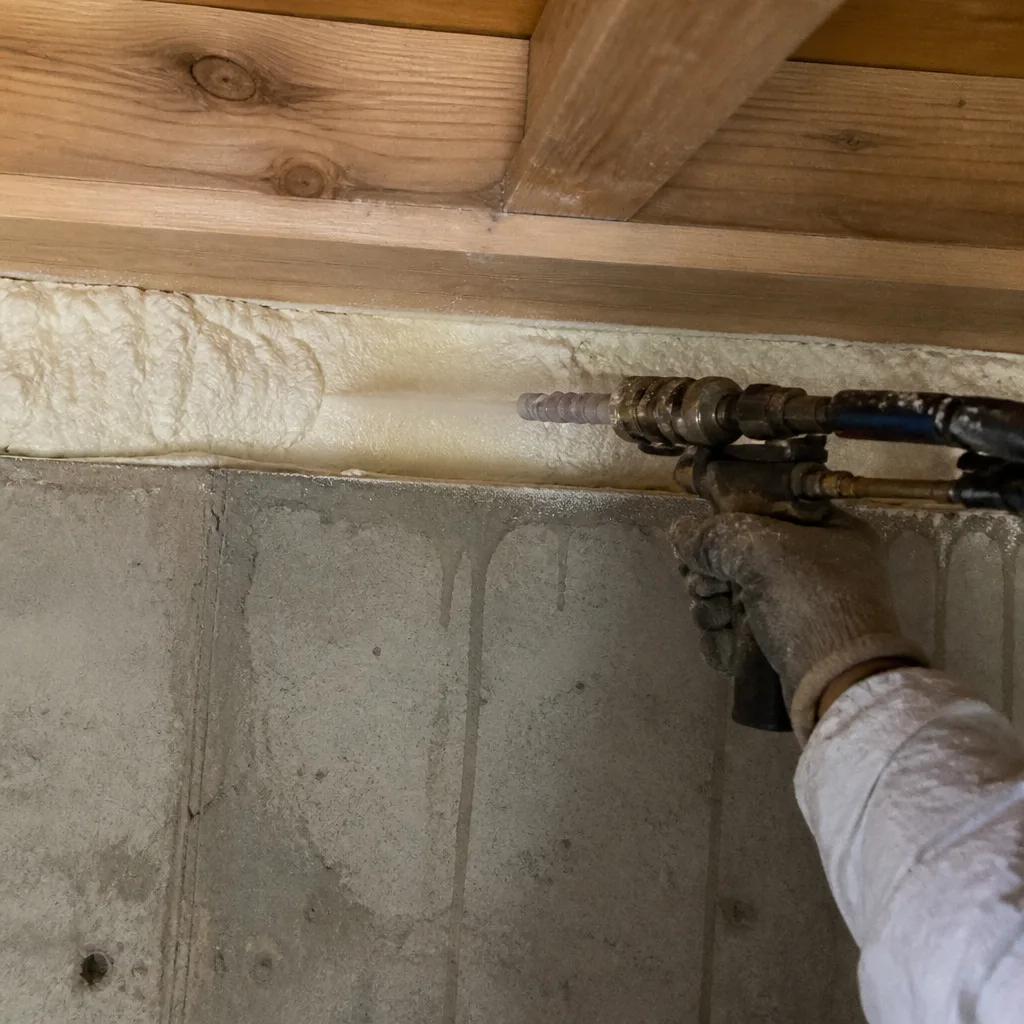
Willow Insulation installs and services insulation from eight manufacturer brands, which means we’re not locked into a single product line and neither are you. For Corona attics, we commonly reach for GreenFiber cellulose for blow-in top-ups over legacy fiberglass, Owens Corning or Johns Manville batts where a clean replace makes sense, and Demilec spray foam for tricky rim joists or knee walls where air sealing is the priority. Carrying deep local stock of these materials means we can schedule Corona jobs without waiting on a warehouse transfer, and if you have an existing insulation issue with a specific brand, we can match it or upgrade it with a direct recommendation rather than a sales pitch.
Common Attic Insulation Problems We See in Corona Homes
- Compressed original fiberglass batts. In 1980s and 1990s tract homes across 92879 and 92881, R-11 or R-13 batts settle to half their original depth from years of heat cycling. The top plates end up bare, and the insulation that remains is doing almost nothing.
- Santa Ana dust loaded into the attic floor. Fine hill dust blows in through soffit vents and gable vents, especially in older ranches near the 91 corridor and in 92877. It packs into the batting, accelerates settling, and leaves a layer of grime that holds heat against the ceiling.
- Missing radiant barrier and poor ventilation. Attic temperatures past 160°F are normal in Corona from late spring through early fall. Without a radiant barrier and proper baffle venting, the insulation gets heat-soaked and the HVAC system works against a hot ceiling all afternoon.
- Bare top plates and air leaks at penetrations. Even in homes with decent insulation depth, gaps at can lights, ceiling boxes, and plumbing chases leak conditioned air straight into the attic. Air-sealing those penetrations is the highest-value fix we do, and most Corona homes need it before they need more insulation.
Pricing for Attic Insulation in Corona, CA
Here’s what we’re seeing in Corona right now. A blow-in top-up over existing fiberglass in a typical 1,200 to 1,800 square foot tract home runs $1,100 to $2,400. Full attic insulation replacement, including removal of old material and air-sealing, runs $2,800 to $5,500 depending on the attic size and whether we’re pulling out compressed batts or settled blown-in. Adding a radiant barrier to the roof deck runs $1,500 to $3,200. Attic cleaning as a standalone job runs $700 to $1,800. Attic baffles and ventilation prep, which we recommend on nearly every Corona job, adds $300 to $900. These are real ranges, not bait pricing. The single biggest variable is whether your attic needs cleaning and air-sealing before new material goes in. Call (855) 473-6541 and we’ll give you an exact quote for your house, for free.
We Also Serve Cities Near Corona
Willow Insulation works throughout western Riverside County. Beyond Attic Insulation in Corona, we run crews to Home Gardens, El Cerrito Corona, Eastvale, and Norco on a regular schedule, which means if you’re just across the city line, the same Corona pricing and response times apply. If you’re not sure we cover your street, call (855) 473-6541 and ask.
Serving Corona, CA — Our Local Coverage Area
We’re based in the Corona area and know this community well. Use the map below to see our service coverage — if you’re nearby, we can almost certainly help.
FAQs About Attic Insulation in Corona
Your original fiberglass batts have spent 30-plus years absorbing Santa Ana dust and heat cycling, which compresses them and leaves a layer of fine grit that prevents new blown-in insulation from settling properly against the attic floor. Cleaning removes the old compressed material and dust so the new cellulose can reach its full depth and R-value. Call (855) 473-6541 for an exact quote; estimates are free.
Yes, and in our experience these are the homes that benefit most. Single-story ranches near the 91 corridor often have no radiant barrier and minimal ventilation, so attic temps climb past 160°F and radiate down into the ceiling. A radiant barrier under the roof deck reflects that heat back out, and when paired with air-sealing, it can drop your upstairs temperature noticeably from May through October.
Most Corona homes built in the 1980s and 1990s with R-11 or R-13 batts should be brought up to at least an R-38 to R-49 level for attic floors in our climate. That typically means blowing in 12 to 16 inches of cellulose over the old material after it’s been cleaned and air-sealed. The exact depth depends on your attic’s square footage and existing condition.
You can, but it’s rarely the right move in Corona’s climate. If the existing batts are dust-loaded or compressed, the new batts won’t sit flat, and you’ll still have bare top plates and air leaks underneath. We recommend either a blow-in top-up after cleaning or a full replacement if the old material is in bad shape. Either way, the answer is faster and cheaper than doing it wrong twice.
We install fiberglass from Owens Corning, Johns Manville, Knauf, and CertainTeed; mineral wool from Rockwool; open-cell and closed-cell spray foam from Icynene and Demilec; and cellulose from GreenFiber. That means your recommendation comes from what your attic actually needs, not from a single brand relationship. Call (855) 473-6541 and we’ll walk you through the options for your specific house.
Written by Noel Castaneda, Owner at Willow Insulation, serving Corona since day one.