Fast, Reliable Attic Insulation Across South El Monte
Attic insulation in South El Monte is not a luxury, it’s a line of defense against the San Gabriel Valley heat. Most homes in this city were built between the 1940s and 1960s, decades before anyone thought about insulating attics, and in July and August that bare ceiling cavity becomes an oven. We’re Willow Insulation, and we work in South El Monte every week. Same-week scheduling is the norm, not the exception. Call (855) 473-6541 for a free estimate and we’ll put eyes on your attic before you spend another summer paying to cool the roof.
Why Willow Insulation Is South El Monte’s Preferred Attic Insulation Company
South El Monte homeowners call us because our recommendation is never tied to what we happen to have on the truck. We carry eight manufacturer brands, so the conversation starts with your house, not our inventory. A 1952 wood-frame stucco home on a tight lot has different needs than a newer build near the Rio Hondo. We look at the framing, the existing electrical, the ventilation, and the garage wall assembly before we suggest anything.
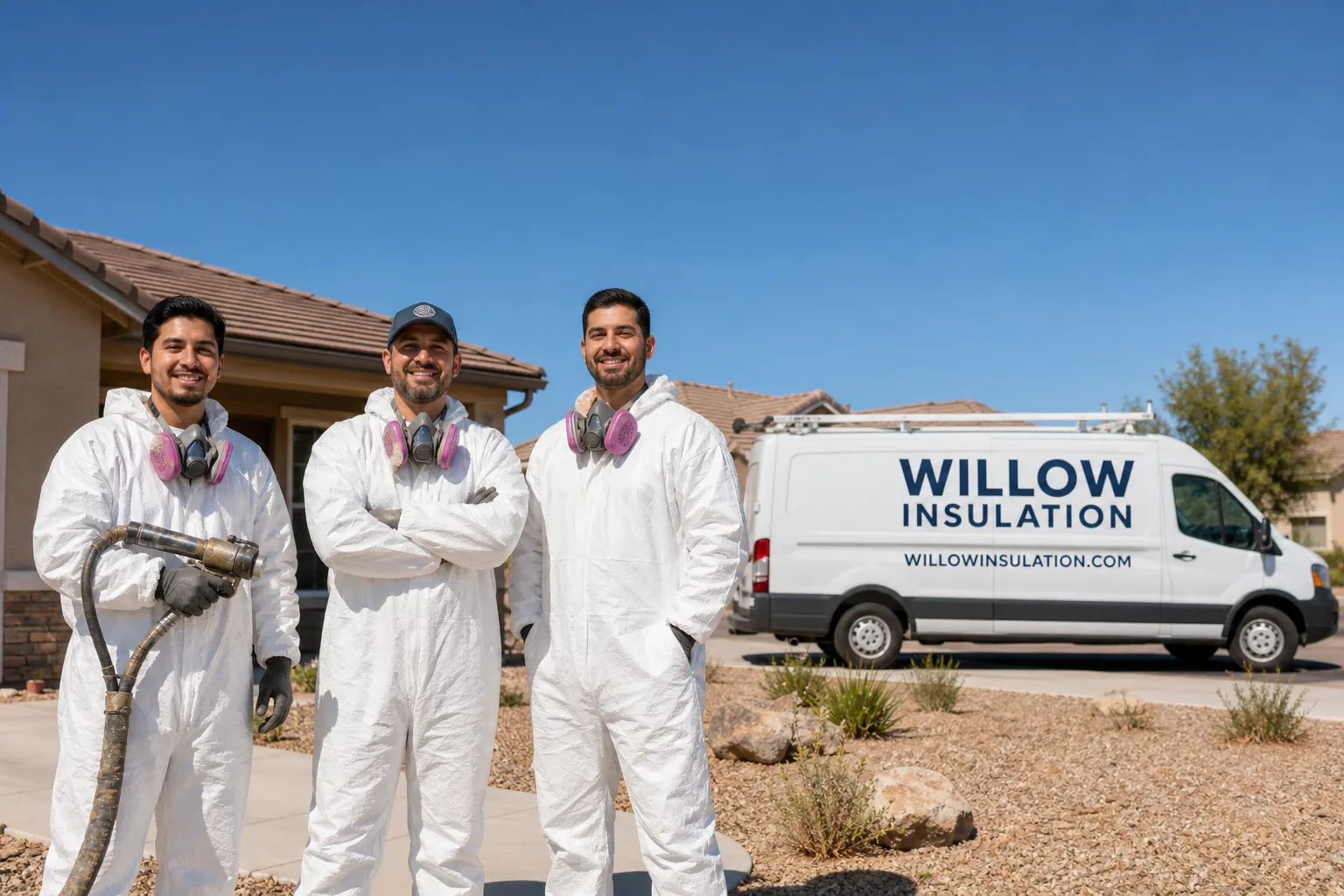
Our team is led by Noel Castaneda, who has spent years crawling through the attics of post-war tract homes across the 91733 ZIP code. That specific experience matters. These attics have quirks: low clearance, odd joist spacing, and sometimes knob-and-tube wiring that predates modern codes. We know what we’re looking at, and we’ll tell you straight if the job needs electrical work first. Local reviews mention that honesty repeatedly. South El Monte customers don’t want a sales pitch, they want a specialist who respects the age of their home. That’s us.
Attic Insulation Options in South El Monte
Attic insulation in South El Monte falls into three methods we install daily: blown-in, batt, and spray foam. The right choice depends on your attic’s condition, your budget, and whether you plan to use the space. Here’s how each option performs in the local climate.
Blown-In Attic Insulation
Blown-in insulation is the workhorse for South El Monte’s older homes. Loose-fill fiberglass or cellulose gets blown over the attic floor, filling gaps and settling around the odd framing found in 1940s and 1950s construction. GreenFiber cellulose is a recycled-content option we install often here because it packs tightly and performs well in dry heat. It’s also the fastest way to bring an uninsulated attic up to current recommendation levels. A standard 1,000 – 1,200 sq ft attic top-up in South El Monte typically runs $1,500 – $2,400 for fiberglass and $1,800 – $2,800 for cellulose, depending on depth requested.
Attic Batt Insulation
Batt insulation works well when an attic has clear joist bays and no wiring obstacles. Owens Corning and Johns Manville fiberglass batts are common spec on newer additions or detached garages converted to living space. In South El Monte’s older attics, batts are often paired with air sealing around top plates and penetrations. Batt installation for a 1,000 sq ft attic generally lands between $1,700 and $2,600 in this market.
Spray Foam Attic Insulation
Spray foam costs more upfront but delivers the strongest air-sealing performance, which matters in South El Monte where 90°F-plus summer days push heat through every seam. We install both Icynene open-cell and Demilec closed-cell systems. Closed-cell is common on cathedral ceilings and roof-deck applications in the San Gabriel Valley. Expect $3.50 – $6.50 per square foot for open-cell and $5.50 – $9.00 for closed-cell, installed. We’ll explain exactly why it does or doesn’t make sense for your roof pitch before you commit.
Attic Insulation Top-Up in South El Monte
Many South El Monte attics have some insulation, but it’s thin, compressed, or original to the Eisenhower administration. A top-up adds material over what’s there, bringing the assembly up to a useful level without a full removal. This is the most common job we quote in the 91733 ZIP code. Top-up pricing runs $1,200 – $2,200 for blown fiberglass and $1,500 – $2,700 for GreenFiber cellulose, depending on existing depth and target R-value. It’s the fastest way to cut cooling bills this summer.
Attic Insulation Replacement in South El Monte
Sometimes the right move is removal, not top-up. Old insulation can hold dust, rodent droppings, or moisture stains from past roof leaks, and in South El Monte’s arid climate it rarely recovers once compromised. We remove the material, inspect the deck and wiring, air-seal, and install fresh insulation in the same visit. Full replacement in a 1950s tract home attic typically runs $2,500 – $4,500 depending on attic size and disposal load. We’ll always tell you if a top-up would do the job instead.
Attic Ventilation in South El Monte
Attic ventilation is a make-or-break detail for South El Monte homes, where summer attic temperatures routinely climb past 120°F. A properly ventilated attic lets hot air exit through ridge or roof vents while cooler air enters through soffit or eave vents. When ventilation is missing or blocked – common in post-war stucco homes with narrow eaves – your new insulation absorbs heat all day and radiates it back into your ceilings all night. That’s why we rarely recommend insulation upgrades without checking airflow first.
Installing baffles and balancing intake/exhaust airflow in a typical 1,000 – 1,500 sq ft South El Monte attic runs $400 – $900, not including insulation. The work involves clearing existing vent openings, adding baffles to protect soffit intakes, and confirming air moves through the space. We also prep for future blown-in insulation by keeping the insulation depth below any roof-deck contact points.
Attic Baffles & Ventilation Prep
Baffles are the plastic or foam channels that keep blown-in material from blocking your soffit vents. In South El Monte’s older homes with shallow eaves, baffles are often the difference between a working attic and a pressure cooker. We install them before any blown-in job, and the cost is included in the insulation estimate when applicable.
When Ventilation Fails
Signs of poor attic ventilation include bedrooms that stay hot long after sunset, peeling ceiling paint, and insulation that looks matted or discolored. If you’ve noticed any of these in your South El Monte home, get the airflow checked before adding more insulation. Adding material to a static, overheated attic just stores the problem.
Radiant Barrier in South El Monte
Radiant barrier in South El Monte addresses the one thing insulation alone cannot: direct radiant heat from the sun hammering the roof deck all afternoon. A radiant barrier is a reflective foil installed on the underside of the rafters. It reflects heat back toward the roof deck before it ever reaches your insulation or your living space. In the San Gabriel Valley, where summer sun is relentless and attic temps climb into the 120s, this measure can reduce attic heat transfer meaningfully.
Installing a radiant barrier across a 1,000 – 1,500 sq ft South El Monte attic typically runs $1,200 – $2,100, depending on roof pitch and access. It’s most effective when paired with proper ventilation and a solid layer of blown insulation, not as a replacement for either. We’ll show you data on how it performs in our specific climate zone, and won’t oversell it where the roof design limits its benefit.
Roof-Deck and Rafter Installation
We attach the radiant barrier directly to rafters, which keeps an air gap and allows any condensation to escape. In South El Monte’s low-pitched tract home roofs, this is often a half-day job. The house stays cooler, and your AC doesn’t fight the attic as hard.
Pairing Radiant Barrier With Insulation
Radiant barrier and blown-in insulation do different jobs. Insulation slows conductive heat; radiant barrier reflects radiative heat. South El Monte homes benefit from both, and we will sequence them correctly: air sealing, then ventilation, then radiant barrier, then blown material. It’s the sequence that makes the numbers on your SCE bill move.
Trusted Brands We Service in South El Monte
We install Owens Corning and Johns Manville fiberglass, Demilec spray foam, and GreenFiber cellulose, which means the right material is always on the table for South El Monte jobs. Stocking parts and materials for older attics across 91733 matters because these homes share a construction DNA: wood framing, stucco exteriors, low ceilings. We know what the local attics need, and we keep the materials on hand to turn quotes into completed installs fast. Never a showroom pitch; just a material choice that fits the house.
Common Attic Insulation Problems We See in South El Monte Homes
- Bare attics from the 1940s – 1960s: Most South El Monte homes were built before insulation codes and many still have zero material above the ceiling. Homeowners often find the original roof deck and nothing else, and then wonder why upstairs rooms never cool down.
- Original garage-door hardware and attic air leaks: The same aging one-piece doors and openers that strain in South El Monte garages also create wall and ceiling penetrations that leak attic heat into the living space. A customer on a 1950s block off Rush Street called after her one-piece door slammed down when a fatigued torsion spring snapped. We treated the garage and attic as one job: air-sealed the top plates where old opener wiring penetrated, blew Owens Corning fiberglass over bare joists, and swapped the dated spring and opener to a modern sectional setup. Cooling complaints dropped and the door stopped fighting its opener.
- Knob-and-tube wiring over bare joists: These post-war attics often still have original cloth-wrapped wiring. Insulation crews must protect or reroute it before blowing any material. Skipping that step creates a real fire hazard, and no insulation job in South El Monte should start without a wiring check.
- Unsealed top plates and chases: In stucco wood-frame construction, interior walls often open directly into the attic through unsealed top plates. Without air sealing first, blown insulation lets 90°F-plus summer attic heat bypass the new material entirely. The house stays hot, and the insulation gets blamed.
Pricing for Attic Insulation in South El Monte, CA
Attic insulation pricing in South El Monte runs from about $1,200 for a basic top-up on a small attic to $4,500 or more for full replacement with air sealing on a larger post-war home. Blown fiberglass is the most economical at $1,500 – $2,400 for standard attics; GreenFiber cellulose runs $1,800 – $2,800; batt installations fall between $1,700 and $2,600; and spray foam ranges from $3.50 to $9.00 per square foot depending on open-cell or closed-cell. Attic ventilation work adds $400 – $900. Radiant barrier adds $1,200 – $2,100. Every estimate is line-itemed, and there’s no charge to have Noel Castaneda make the assessment. Call (855) 473-6541 for a free estimate.
We Also Serve Cities Near South El Monte
Willow Insulation provides Attic Insulation across the San Gabriel Valley, including South El Monte, El Monte, Rosemead, North El Monte, and Temple City. If you’re just outside the 91733 boundary, we’re still close by and scheduling the same week in most cases.
Serving South El Monte, CA — Our Local Coverage Area
We’re based in the South El Monte area and know this community well. Use the map below to see our service coverage — if you’re nearby, we can almost certainly help.
FAQs About Attic Insulation in South El Monte
Retrofit to a sectional door and modern opener before insulating, in most cases. A sagging one-piece door strains its opener, and the wall and ceiling penetrations around that old hardware leak hot attic air into your conditioned space. Insulating without sealing those penetrations is like closing a valve downstream of a broken pipe. We handle the air-sealing around the garage and the top plates as part of the attic job. Call (855) 473-6541 and we’ll tell you how much of the job is door retro versus insulation after one walkthrough.
Many South El Monte attics built before 1950 still have knob-and-tube wiring, and yes, it changes the insulation plan. You cannot bury active knob-and-tube under blown insulation – it needs an electrician to assess and possibly replace it first. We inspect for exposed wiring in every attic before quoting, and if it’s present we’ll tell you before any material arrives. That’s a hard sequence rule for us. Call (855) 473-6541 to get your attic checked.
Because South El Monte’s post-war stucco homes leak air through unsealed top plates, wiring penetrations, and the garage wall assembly. Unsealed gaps let hot attic air bypass insulation completely, so R-value never gets a chance to do its job. Air sealing addresses the leak paths first, then the insulation slows what’s left. In these tract homes, sealing often matters more than the insulation depth itself. Call (855) 473-6541 and we’ll show you where your attic is leaking.
Yes, in most San Gabriel Valley attics a radiant barrier pays for itself in cooling reductions over time. It works by reflecting the sun’s radiant heat off the roof deck before it reaches your insulation, which is exactly the heat source that turns South El Monte attics into ovens each summer. It’s most valuable when paired with ventilation and blown insulation, not as a standalone fix. We’ll give you a straight recommendation after seeing your roof pitch and attic access. Call (855) 473-6541 for a free quote.
Look for three signs: rooms that stay hot after the AC runs all day, an attic floor where joists are visible above the insulation, or insulation that sits below the top of the joists in a 1950s tract home. In South El Monte’s older housing stock, any insulation less than roughly 6 – 10 inches of modern material is under-performing for our summer loads. We measure the existing depth and give you a target number for your house. Call (855) 473-6541 to schedule a check.
Written by Noel Castaneda, Owner at Willow Insulation, serving South El Monte since 2010.