
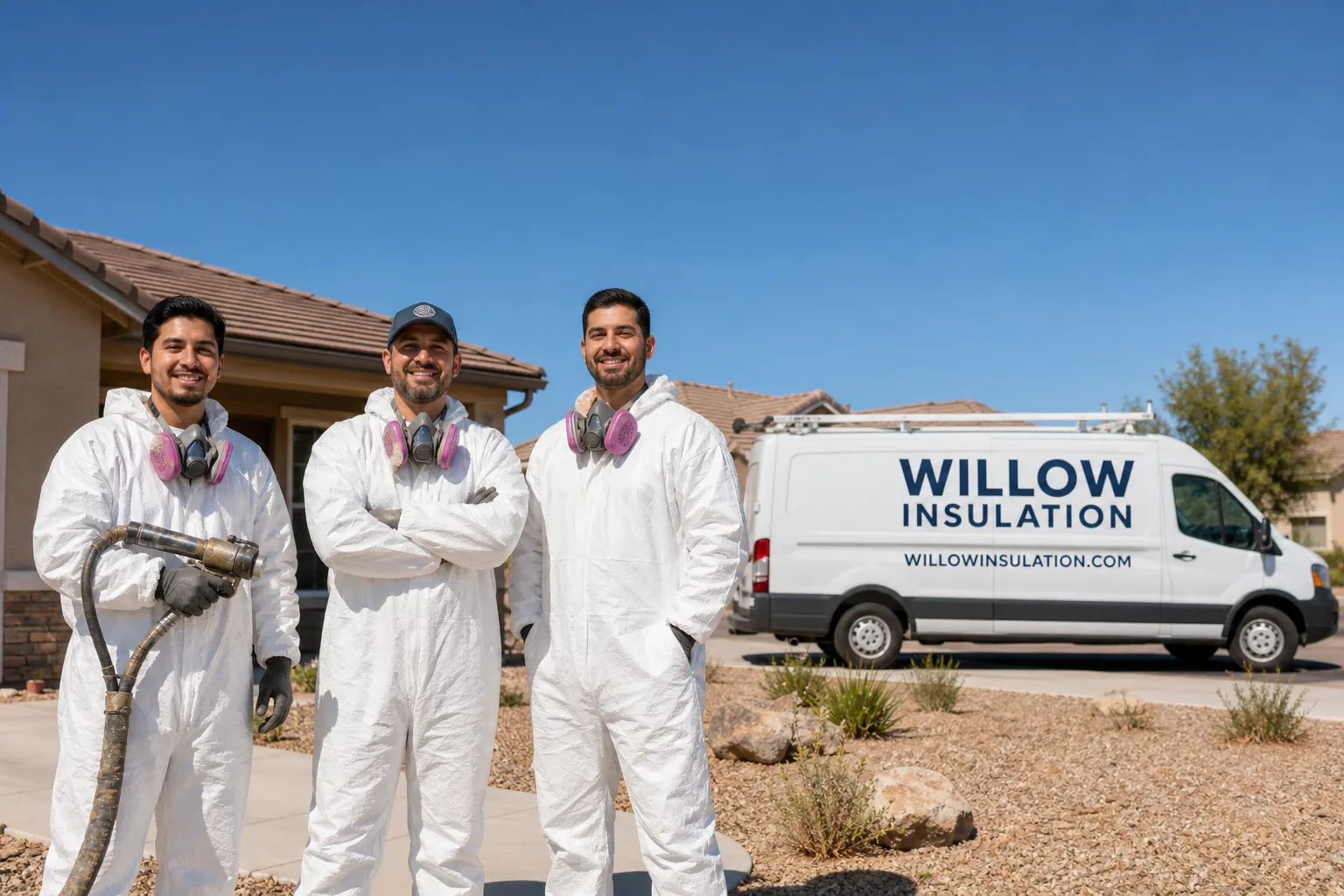
Fast, Reliable Attic Insulation Across March Air Force Base
Attic insulation in March Air Force Base typically runs $1.50 to $3.20 per square foot for blown-in cellulose or fiberglass and $2.75 to $5.60 per square foot for spray foam, with most 92551 retrofit jobs landing between $1,900 and $6,400 all-in. Most of the work we do here involves older military housing stock where insulation has settled to a few inches or was never adequate for inland Southern California’s cooling load. Same-week scheduling is common for standard retrofits. Call (855) 473-6541 and we’ll give you a straight answer on scope and cost before anyone sets foot in your attic.
Why Willow Insulation Is March Air Force Base’s Preferred Attic Insulation Company
We’ve spent enough time in 92551 to know its quirks: 1940s wood-frame base housing with original venting, 1960s stucco units where the attic floor has a thin dusting of settled fiberglass, and newer infill that still leaks conditioned air through unsealed top plates. Homeowners around March Air Force Base call us because we don’t walk in with a single product line and pitch it to every house. We carry Owens Corning and Johns Manville batt products, GreenFiber cellulose, and both Demilec and Icynene spray foam systems. The recommendation comes from what your attic actually needs: radiant barrier for summer heat gain, air sealing for dust and pest intrusion, or a full removal and re-blow after a roof leak or rodent problem. Noel Castaneda has built the company around that material-agnostic approach, and it’s why local property managers and homeowners keep our number on hand when a military housing inspection is coming due.
Attic Cleaning Services in March Air Force Base
Attic cleaning services in March Air Force Base mean something specific in 92551: decades of dust, rodent droppings in older wood-frame units, and settled insulation that has to come out before anything new goes in. We vacuum out the old material, clean the decking, and prep for what’s next, whether that’s air sealing followed by new blown-in cellulose or a full batt replacement. Homeowners in the older base housing blocks off Graeber Street and the surrounding streets deal with this more than most of Riverside County’s newer tracts. A full attic cleanout in this market runs $900 to $1,800 depending on square footage and access, and it’s the right first step when old insulation is compressed, contaminated, or simply gone.
Removal of Settled or Contaminated Material
Most 1940s-70s attics around March Air Force Base have fiberglass or cellulose that has compressed to R-11 or worse, far below what inland heat demands. If pests have nested or a leak has soaked through, removal isn’t optional. We bag and remove everything, then you’re looking at a clean deck and a real conversation about what belongs back up there.
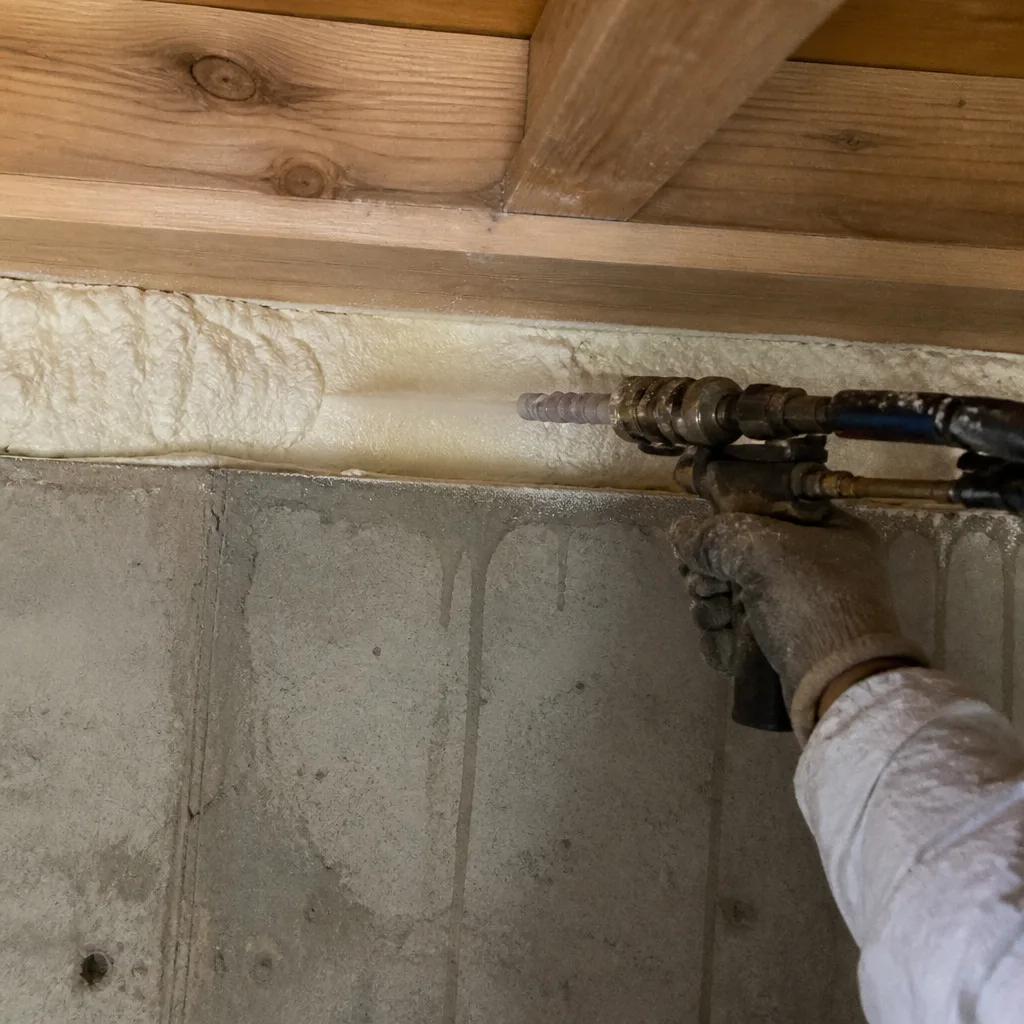
Decking and Ventilation Prep
Once the attic is clean, we check the venting path: soffit vents, ridge or gable vents, and any baffles that may have been crushed or blocked over the years. In older base housing, original venting is often undersized for the heat load, and getting that right before new insulation goes in prevents a dozen problems later.
What happens when you call
- 1
A real person answersNo phone trees — you reach a local pro.
- 2
You get an upfront price rangeHonest numbers before anyone is dispatched.
- 3
A background-checked tech heads outLicensed & insured, dispatched right away.
- 4
You approve before work beginsNothing starts until you say go.
Attic Mold Removal in March Air Force Base
Attic mold removal in March Air Force Base almost always traces back to two things in this climate: blocked or inadequate venting that traps heat and moisture, and wall-furnace flues or bathroom fans venting into the attic rather than through the roof. March Air Force Base’s dry air does not exempt attics from condensation when warm interior air leaks into a hot, tight roof space at night. Attic mold treatment and removal here runs $1,200 to $3,000 for the typical 92551 home, with the exact number depending on affected square footage and whether we’re treating decking, rafters, or both. We treat the surface, correct the venting or bypass that fed the mold, and then re-insulate so the problem doesn’t return.
Moisture Source Correction
The mold is a symptom. In March Air Force Base homes, the source is frequently a bath fan dumping humid air onto insulation or a wall furnace flue penetrating an uninsulated exterior wall and condensing inside the cavity. We fix the pathway while we remediate the damage, because treating mold without correcting the source means paying for the same job twice.
Post-Remediation Insulation
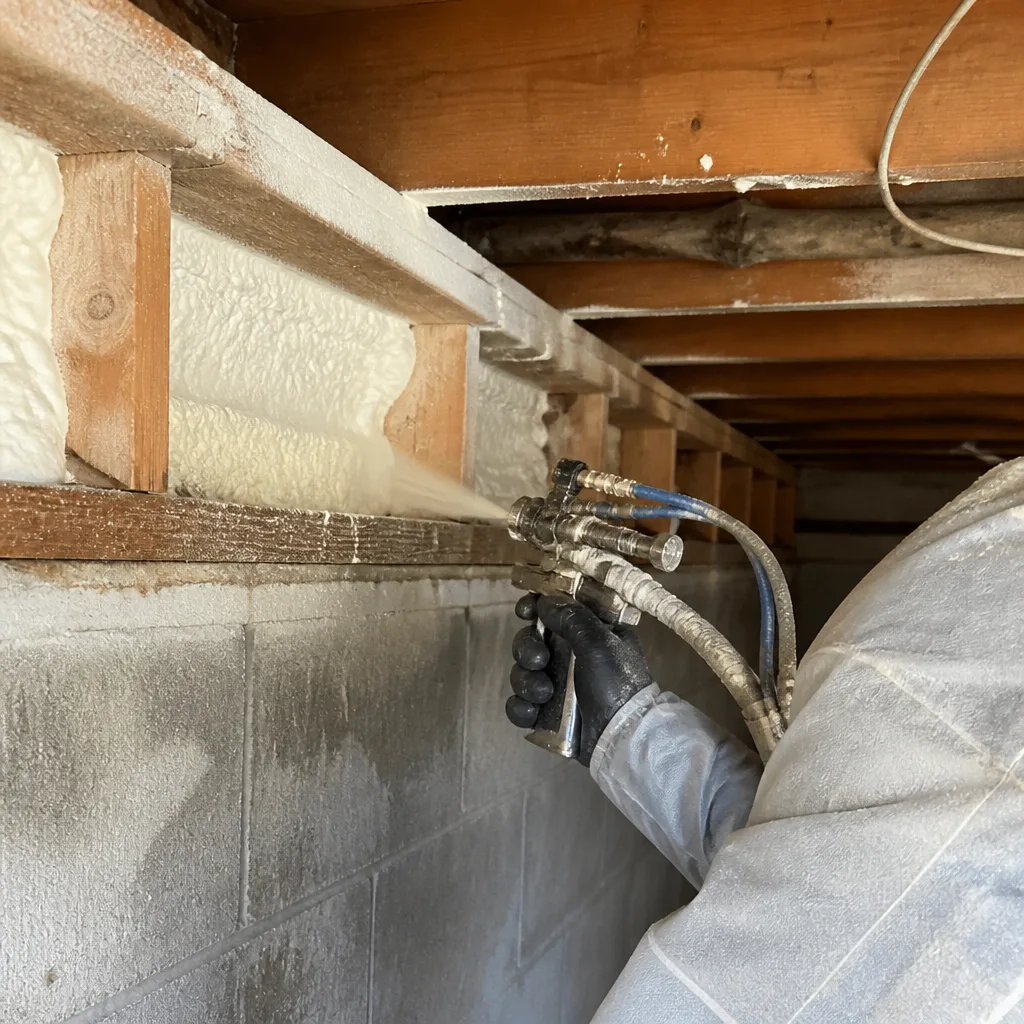
After remediation and drying, we typically recommend air sealing and a fresh blow-in. GreenFiber cellulose is a common choice here because it’s treated for fire and pest resistance and performs well in the attic floor application most 92551 homes call for. You get a clean, code-ready attic that actually resists heat gain.
Trusted Brands We Service in March Air Force Base
We stock materials and parts for March Air Force Base jobs from Owens Corning, Johns Manville, and GreenFiber, and we’re authorized to install both Demilec and Icynene spray foam systems for closed-cell or open-cell applications. That matters locally because we don’t have to order materials after we see your attic: for most 92551 retrofits, everything needed for an attic-floor re-blow or a vented-attic air seal job is on the truck or at our Victorville yard, and we can have it installed without a second trip. When a housing inspection has a deadline, that turnaround matters. We carry the breadth so you’re never steered toward the wrong material for the job.
Common Attic Insulation Problems We See in March Air Force Base Homes
- Settled 1940s-70s insulation over uninsulated walls. Original fiberglass or rock wool in 92551 base housing has often compressed to two or three inches, leaving the attic as a heat sink that works against your AC from May through October. Walls in these units were frequently built with no cavity insulation at all, which means the attic is doing all the thermal work.
- Wall-furnace flue runs through uninsulated exterior wall cavities. We see this constantly in older March Air Force Base housing: a 1950s wall furnace vent pipe running through a bare stud bay with no insulation or air sealing around the penetration. That’s not just an energy problem. It’s a combustion-gas pathway that insulation work has to address correctly, not bury.
- Dust and pest intrusion through unsealed top plates. In this dry inland air, dust is the real enemy, not humidity. Unsealed penetrations around electrical, plumbing, and flue runs let fine dust and rodent traffic into the house and the attic, and a proper air seal is the fix.
- Undersized original venting against the inland cooling load. Many 1940s-60s attics in 92551 were vented for a milder climate than what March Air Force Base actually gets. We regularly add baffles, improve soffit-to-ridge flow, and install radiant barrier to cut ceiling surface temperatures during summer.
Pricing for Attic Insulation in March Air Force Base, CA
Expect to pay $1,900 to $4,800 for a standard attic-floor blow-in in a March Air Force Base home up to about 1,500 square feet. If you’re adding air sealing and vent correction to that scope, add $600 to $1,200. A full removal plus re-insulation on a contaminated 1940s-60s attic in 92551 typically lands between $2,800 and $6,400 depending on access and depth. Radiant barrier installation runs $0.70 to $1.10 per square foot of attic area. Spray foam projects, often chosen for unvented attic conversions or bringing an older roof deck up to code, run $2.75 to $5.60 per square foot. We price from what we find in your attic, not a brochure. Call (855) 473-6541 for a free estimate with real numbers.
We Also Serve Cities Near March Air Force Base
Our crews cover Moreno Valley, Woodcrest, Perris, and Good Hope regularly, so March Air Force Base jobs schedule quickly and route with surrounding Riverside County work. If you’re in 92551 or just outside it, you’re in our service area, and the same material-agnostic approach applies. See our full Attic Insulation services for detail on methods, materials, and what a retrofit involves.
Serving March Air Force Base, CA — Our Local Coverage Area
We’re based in the March Air Force Base area and know this community well. Use the map below to see our service coverage — if you’re nearby, we can almost certainly help.
FAQs About Attic Insulation in March Air Force Base
Yes. We clear the cavity around the flue, verify clearance to combustibles, air-seal the penetration, and then insulate the surrounding wall or ceiling with an appropriate material, usually mineral wool against the flue path with blown-in or batt material beyond the clearance zone. This is a common condition in 92551 military housing, and doing it correctly keeps the wall furnace safe while eliminating a major air and heat leak. Call (855) 473-6541 and we’ll walk the specifics before quoting.
Yes, more than vapor barriers. March Air Force Base’s dry air and wind-driven dust mean the top plate penetrations and flue runs leak conditioned air out and pull dust and pests in. Insulation without air sealing is like putting a heavier blanket over a drafty ceiling. It helps, but it leaves performance and indoor air quality on the table. We air-seal as part of every attic insulation job in 92551.
We remove what’s left, clean the decking, correct the venting, air-seal every penetration, and re-blow cellulose or install batts to current code depth. For most March Air Force Base homes of that era, that means taking the attic floor to R-38 or better. We’ll also check the wall cavity around any original wall furnace flue, since those cavities are frequently uninsulated and unsealed. The result is a house that actually holds conditioned air in summer.
For garages attached to the home, we typically recommend retrofitting rather than leaving old material in place. The garage attic over those early sectional-door-era builds in 92551 is often uninsulated or minimally insulated, and when the garage shares a wall with conditioned space, that heat load pours into the house. For detached garages used for storage or a workshop, a radiant barrier plus air sealing often pays for itself faster than full insulation. We’ll show you both price points and let you choose.
Yes. Radiant barrier is the single biggest attic-house comfort improvement for most 92551 homes because it directly cuts the ceiling surface temperature during summer. We install it in conjunction with insulation, stapled to the underside of the rafters or laid over existing insulation, and it runs $0.70 to $1.10 per square foot as a standalone or combined scope line. For a 1940s-70s home with a strong cooling load, it’s usually the first add-on we suggest after insulation and air sealing.
Written by Noel Castaneda, Owner at Willow Insulation, serving March Air Force Base and the Inland Empire.