Fast, Reliable Attic Insulation Across Glen Avon
Attic insulation in Glen Avon runs $1.60 – $3.20 per square foot for blown-in fiberglass or cellulose, and $2.80 – $5.50 per square foot for spray foam, with most homes in the 92509 ZIP landing between $1,900 and $4,200 all-in depending on attic size and condition. We work throughout Glen Avon, from the older ranch tracts along Camino Real to the newer homes north of the 60, and we know exactly what those attics look like inside when the sun has been on the roof since 7 a.m. Call (855) 473-6541 and we’ll get a real assessment scheduled, not a drive-by quote.
Why Willow Insulation Is Glen Avon’s Preferred Attic Insulation Company
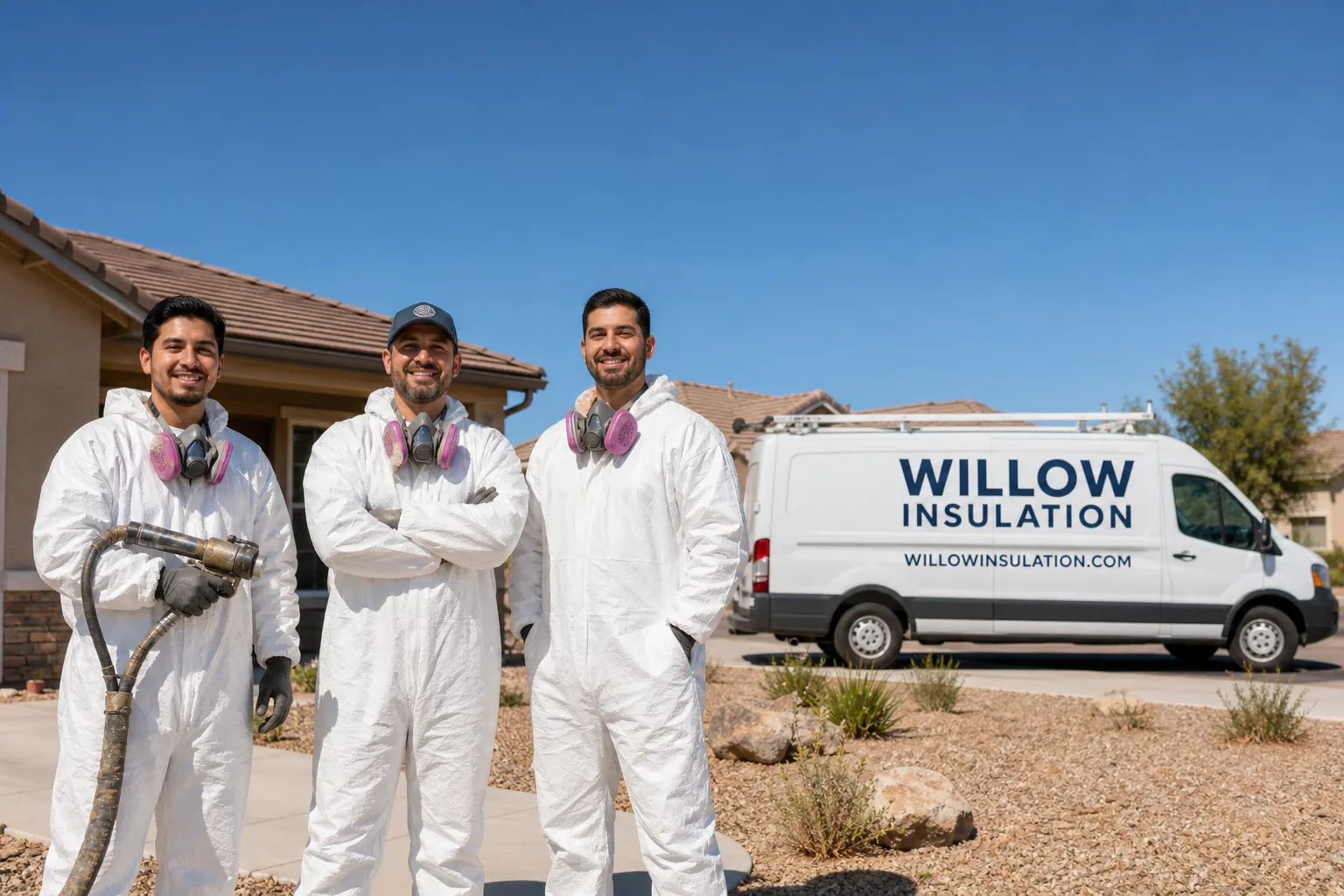
Glen Avon homeowners keep hiring us for one simple reason: we actually work in these attics, not around them. Every low-pitch ranch, every sagging 1960s batt, every unsealed can light in the 92509 ZIP is familiar to us because we’ve seen hundreds of them. Our crew has spent full days on Camino Real, Granite Hill Drive, and the streets off Sierra Avenue doing exactly what this page describes: pulling out old fiberglass, air sealing, and bringing attics up to what inland Riverside County actually demands.
Noel Castaneda built Willow Insulation as a material-agnostic specialist, which matters more in Glen Avon than most places. A coastal insulation contractor might push one product and call it done. We carry Owens Corning, Icynene, Demilec, GreenFiber, and more, so when a Kaiser-era ranch needs blown-in over sagging batts, that’s what we quote, not a spray foam upsell the house doesn’t need.
We also know Glen Avon runs on one-trip logic. The drive in from the high desert isn’t a dealbreaker, but nobody wants a second visit because someone forgot a tool or brought the wrong material. Our trucks are stocked for the specific failure modes we find in these attics, which means the assessment, the fix, and the cleanup happen in a single visit more often than not.
Insulation Contractors in Glen Avon
Insulation contractors in Glen Avon deal with a very specific housing stock: postwar Kaiser-era tracts built fast, with low-pitch roofs and attics that were barely insulated by today’s expectations. A homeowner here calls us when the upstairs bedrooms hit 86°F at 9 p.m. or when the AC runs constantly from June through October and the bill still climbs. The job is rarely just “add insulation.” It typically means removing or topping up failed batts, air sealing, and getting the attic ventilation working so the new insulation actually performs. Typical full attic insulation in Glen Avon runs $2,200 – $4,200; a top-up over existing batts runs $1,400 – $2,600.
Blown-In and Batt Installation
For the low-pitch ranch ceilings common in Glen Avon, blown-in GreenFiber cellulose or Owens Corning fiberglass tends to work better than trying to wedge batts into tight, uneven joist bays. We also install batt insulation where the attic is accessible and the joist spacing makes it the cleaner fix. The call is driven by the attic, not by what’s on the truck.
Air Sealing Before Insulation
Air sealing is the part most homeowners never see and most cheap bids skip. Around recessed can lights, top plates, and plumbing penetrations, the gaps are what allow 100°F attic air to pour into living space. We seal those before a single bag of insulation goes in.
Attic Ventilation in Glen Avon
Attic ventilation in Glen Avon is not optional; a ventilated attic here runs 20 – 40°F cooler than an unventilated one on an August afternoon. Homes in the 92509 ZIP with original low-pitch attics and no ridge or soffit ventilation essentially bake their rafters and whatever insulation is up there. The fix typically involves adding or repairing baffles, clearing blocked soffit vents, and installing balanced exhaust so the Santa Ana winds push hot air out instead of trapping it. A ventilation and baffle job in Glen Avon runs $650 – $1,700 depending on attic size and how many vents need work. The value is not just comfort; it also extends the life of the roof deck and keeps the new high-R insulation from cooking into uselessness.
Baffles and Soffit Prep
Older Glen Avon homes often have soffit vents that were painted over, stuffed with old insulation, or never installed to begin with. We prep the soffits and install rafter baffles so air moves from the eaves to the exhaust. No baffles means no airflow, and no airflow means the new insulation works against itself.
Ventilation for Low-Pitch Roofs
Low-pitch attics like the ones on Camino Real and throughout the Jurupa hills struggle more than steep roofs because there’s less vertical stack effect to drive hot air up and out. Adding powered or passive exhaust and making sure intake is unobstructed changes how that attic behaves by late afternoon, and it also reduces the temperature load on whatever insulation is already up there.
Trusted Brands We Service in Glen Avon
Glen Avon homeowners shouldn’t have to wonder whether the product we’re recommending is the best one for their attic, or just the one we have on hand. We stock and install across the major categories: Owens Corning fiberglass, GreenFiber cellulose, Icynene and Demilec spray foam, and Rockwool mineral wool for the rare Glen Avon attic where fire resistance or sound isolation matters more than thermal performance. Because we’re not tied to one manufacturer, we’re free to recommend what actually fits the house. A 1972 ranch off Granite Hill Drive with failed batts gets a different answer than a 2005 two-story with a conditioned attic over the garage. Both are right, just different. The material breadth means we show up to Glen Avon with the right product in the truck, not a compromise.
Common Attic Insulation Problems We See in Glen Avon Homes
- Sagging R-11 and R-13 batts from the 1960s and 70s. The original fiberglass in these low-pitch attics falls away from the top plates over time, leaving open seams that let wind-driven hot air wash straight through. We find this on nearly every original attic in the older Glen Avon tracts.
- Unsealed recessed can lights dumping heat into bedrooms. The 1960s and 70s ceilings in Glen Avon were rarely air-sealed around can lights. Those fixtures act like little hatches, sending the hottest attic air directly into the room below.
- No ventilation in low-pitch attics. Many of these homes have a small gable vent at best, which means the attic hits 130°F or more by early afternoon. Even new insulation can’t overcome a sealed-up attic that can’t breathe.
- Dust and hot-air infiltration during Santa Ana events. When the winds funnel through the Jurupa Hills, every unsealed penetration in the ceiling plane becomes a dust entry point. Homeowners notice the dust first and the heat second, but they come from the same open gaps.
Pricing for Attic Insulation in Glen Avon, CA
You’ll pay between $1,900 and $4,200 for a full attic insulation job in Glen Avon, with exact cost tied to attic square footage, access difficulty, and how much air sealing the house needs. A top-up over existing batts runs $1,400 – $2,600. Spray foam lands higher, at $2.80 – $5.50 per square foot, and it’s the right call for specific attics, not a default. Attic ventilation and baffle work adds $650 – $1,700 when it’s needed, and in Glen Avon it usually is. Those are honest ranges, not bait. Call (855) 473-6541 and we’ll give you a written estimate based on your actual attic, not a square-footage guess over the phone.
We Also Serve Cities Near Glen Avon
Our Attic Insulation team works throughout the Jurupa Valley area. We regularly run crews to Pedley, Sunnyslope, Rubidoux, and down into Riverside, so if you’re just outside Glen Avon, the same crew and the same material-agnostic approach are available. Learn more about our work in the area on our Attic Insulation in Glen Avon page.
Serving Glen Avon, CA — Our Local Coverage Area
We’re based in the Glen Avon area and know this community well. Use the map below to see our service coverage — if you’re nearby, we can almost certainly help.
FAQs About Attic Insulation in Glen Avon
Glen Avon’s postwar ranch homes need air sealing first because the original construction never included it. The recessed can lights, top plates, and plumbing chases in these 1960s and 70s attics were framed and finished without a single seal between attic air and living space. If you blow new insulation over those open penetrations, you’re putting a blanket over a open window. The hot, dust-laden air the Santa Ana winds push through the Jurupa Hills will still find its way down. We seal the can lights and top plates first, then the insulation does its job. Call (855) 473-6541 for an assessment that includes air sealing, not just insulation depth.
Yes, a low-pitch attic changes everything about the job. The shallow space means less clearance for our crew, less room for airflow, and tighter angles for getting material to the far corners. It also means the roof deck sits closer to the ceiling below, so the attic heats up faster and stays hotter longer. That’s why we usually start work at dawn in Glen Avon, especially in summer, and why we focus on ventilation and air sealing before layering in high-R insulation. A steep-pitch attic in Riverside can get away with less; a low-pitch Glen Avon attic cannot.
Almost entirely, yes. Glen Avon sits in inland Riverside County where 100°F-plus summer days are normal and the Santa Ana winds push heat and dust through every gap in the building envelope. Winter cold is mild. The real problem is radiant heat gain from a low-pitch roof that’s been baking since late morning, and hot-air infiltration through unsealed ceiling penetrations. Insulation choices here lean toward high-R blown-in products and radiant barriers, not the heavy cold-weather batts homes in the mountains might need.
In Glen Avon’s summer conditions, high-R insulation and attic ventilation are two halves of the same fix. The insulation slows heat transfer from the attic into the living space; the ventilation gives that heat somewhere to go. Without ventilation, an attic off Camino Real can hit 130°F by early afternoon, and that heat eventually conducts through even the best-insulated ceiling. We install baffles and balanced exhaust so the air moves from the soffits out through the roof, keeping the attic 20 – 40°F cooler and letting the new insulation do the job it’s rated for.
We install across the major manufacturers rather than pushing a single line. In Glen Avon attics, that’s typically Owens Corning fiberglass for blown-in and batt work, GreenFiber cellulose for homeowners who want the recycled-content option, and Icynene or Demilec spray foam for specific sealing and rim-joist applications. Rockwool mineral wool is available when fire resistance or sound isolation is the priority. What we recommend comes from the attic conditions and your goals, not from what’s left in the warehouse. Call (855) 473-6541 and we’ll walk you through the tradeoffs honestly.
Written by Noel Castaneda, Owner at Willow Insulation, serving Glen Avon and the Jurupa Valley area for over a decade.