
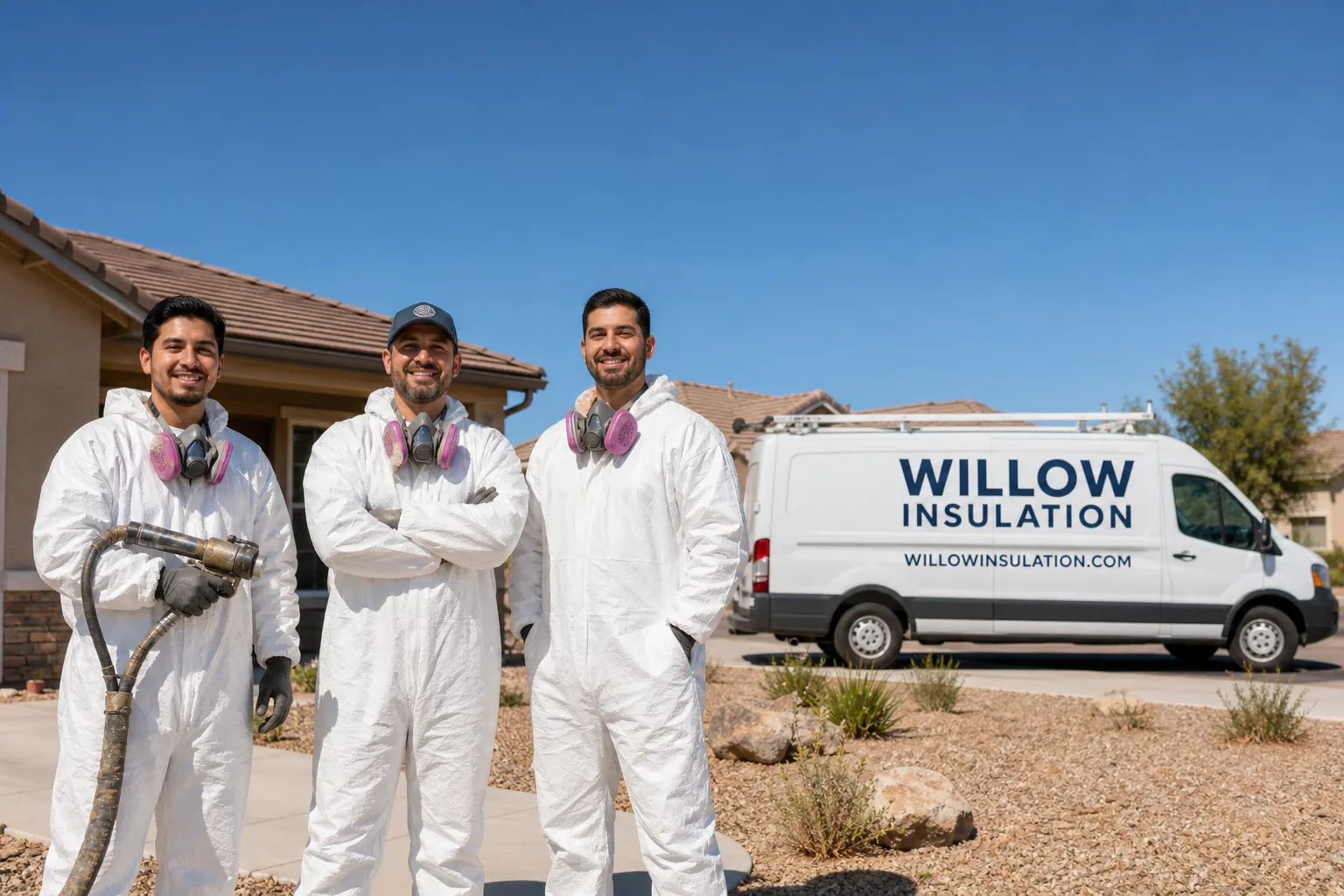
Fast, Reliable Attic Insulation Across Crestline
Most Crestline homes lose heat through the attic faster than anywhere else, and at 4,600 feet that loss shows up as ice dams in January and a house that won’t cool down in August. Attic insulation in Crestline typically runs $1,800 – $4,200 depending on square footage, access, and whether old material needs to come out first. We’re up here regularly, we know the cabins, the A-frames, the steep pitches, and the deferred maintenance that comes with second homes. Call (855) 473-6541 and we’ll schedule a walk-through within a few days.
Our Attic Insulation crew works the whole 92325 area from Lake Gregory up to the Rim of the World Highway, and we’ve spent enough time in these attics to know what a Crestline winter does to insulation that was marginal to begin with. You’re not dealing with a flatland problem up here.
Why Willow Insulation Is Crestline’s Preferred Attic Insulation Company
Crestline homeowners call us after two things happen: either the PG&E bill stops making sense, or a roofer points out that the ice dam on the north slope is a symptom of heat leaking through the ceiling. We’ve addressed both in every part of 92325, from the older grid streets near Lake Gregory Drive to the ridge-top cabins off Highway 18. The homes up here are not like the tract housing down in San Bernardino. They’re older, they’re leakier, and most have attics that became storage rooms decades ago, compressing whatever insulation was there to a fraction of its original performance.
Noel Castaneda, who leads our team, has walked hundreds of mountain attics in the San Bernardino range. The pattern is consistent: original fiberglass from the 1970s, compressed to R-7 or worse, with gaps at kneewalls that let cold air pour in. We quote the job honestly, explain what material fits your specific home, and leave the attic cleaner than we found it. We’re not a general contractor dabbling in insulation. It’s the only trade we do.
As a specialist serving Crestline, we carry the full portfolio to match the right material to the home instead of forcing one product onto every job. That matters when you’re deciding between adding blown-in cellulose over old batts or pulling everything and starting fresh with spray foam against a vaulted A-frame ceiling.
Attic Insulation Removal in Crestline
Attic Insulation Removal in Crestline is rarely optional when you’re dealing with a cabin that’s seen 40 or 50 mountain winters. Old insulation up here isn’t just underperforming; it’s often wet from ice dams, compressed from decades of Christmas decorations and camping gear, or contaminated with rodent activity that’s common in pier-and-beam mountain homes. Removing it properly means commercial vacuums, full containment, and a thorough inspection of the decking below before anything new goes in.
When Removal Becomes Necessary
If you can see dark staining along the underside of the roof sheathing, that’s moisture accumulating from heat leaking past inadequate insulation and ventilation. If the existing material is flattened to less than half its original thickness, it’s doing almost nothing. Both conditions are common in Crestline. New insulation over damaged material just buries the problem.
What Removal Costs Here
For a typical Crestline attic, removal runs $900 – $1,800 depending on access and how much material is up there. A cramped A-frame with a low-pitch roof and a scuttle hole smaller than code requires takes longer than a conventional ranch with a full pull-down stair. We’ll give you an exact figure before we start, not after.
Insulation Contractors in Crestline
Insulation Contractors working in Crestline need to understand snow load, ice damming, and the way a 1950s wood-frame cabin responds to freeze-thaw cycles differently than a stucco house in the flats below. We’ve been providing Reflectix service in Crestline long enough to know that the right attic insulation here isn’t a code-minimum box check. It’s the difference between a roof that sheds snow cleanly and one that grows ice dams every February.
What Sets a Mountain Insulation Specialist Apart
You need air sealing before insulation, especially at the kneewall transitions and the top plates. You need baffles that keep the soffit vents open under deep snow. And you need a contractor who knows Owens Corning R-30 batts won’t fix a vaulted ceiling with no vent channel. We do the assessment first because up here, the assessment changes everything.
The Material-Agnostic Difference
Some companies push whatever’s on the truck. We carry Owens Corning, Icynene, Demilec, and GreenFiber, which means the recommendation comes from your home’s actual conditions, not our inventory. A Cedar Glen cabin with 2×4 trusses gets a different solution than a newer build with a full attic floor.
Trusted Brands We Service in Crestline
We stock and install across the full spectrum so Crestline homeowners actually get a choice. Need closed-cell spray foam against a vaulted roof deck? We run Icynene and Demilec systems. Want a recycled-content blown-in option for an attic floor that’s already close to where it should be? GreenFiber cellulose goes in clean and dense. And for straightforward batt replacement in a walkable attic, Owens Corning fiberglass with the right R-value does the job at a fair price. We keep the material leads for these systems on hand, so quoting and scheduling for 92325 jobs doesn’t stall waiting on supply chain delays.
Common Attic Insulation Problems We See in Crestline Homes
- Compressed insulation from attic storage. In mountain cabins, the attic is often the only storage space, which means boxes and seasonal gear press the insulation flat. Once compressed, fiberglass loses most of its thermal resistance and the ceiling below starts radiating cold in winter.
- Ice damming from poor ventilation. When heat escapes through the ceiling, it melts snow on the roof, which refreezes at the eaves. The resulting ice dam backs water up under the shingles and soaks the insulation below. This is the number one call we get after a cold snap on the north side of Lake Gregory.
- Kneewall gaps in A-frames and vacation homes. The short vertical walls where a sloped ceiling meets the attic floor are rarely sealed in older builds. Cold mountain air flows straight through those gaps and bypasses the insulation entirely, making the home feel drafty no matter how much material is in the floor.
- Original batt insulation past its service life. Many 1960s and 1970s cabins up here still have the original fiberglass, often at R-11 or less. Fifty years of dust, moisture, and settling drops that to functional R-4. The owners don’t feel it in summer, but they sure feel it when the January bill arrives.
Pricing for Attic Insulation in Crestline, CA
Here’s what we quote in 92325, based on real jobs we’ve completed recently. Blown-in cellulose or fiberglass over an existing floor runs $1,500 – $2,800 for a typical 1,200-square-foot attic. Full removal and replacement with R-30 batts lands between $2,800 and $4,500. Spray foam on a vaulted or cathedral ceiling is a different animal: $4,500 – $7,500 depending on square footage and whether we’re doing open-cell or closed-cell. Old insulation removal alone is $900 – $1,800. What moves the number: attic access, pitch, how much old material is up there, and whether air sealing needs to happen first. Call (855) 473-6541 and we’ll walk the attic with you and put a fixed number on paper. Estimates are free.
We Also Serve Cities Near Crestline
We run crews up and down the mountain, so if you’re in Lake Arrowhead, Muscoy, San Bernardino, or Highland, the same team that handles Attic Insulation in Crestline can get to you. We schedule jobs in the 92325 area every week, and we group nearby appointments to keep travel costs out of your quote.
Serving Crestline, CA — Our Local Coverage Area
We’re based in the Crestline area and know this community well. Use the map below to see our service coverage — if you’re nearby, we can almost certainly help.
FAQs About Attic Insulation in Crestline
Snow sitting on your roof creates two problems for attic insulation: weight and ice damming. When warm air leaks through the ceiling, it melts the bottom layer of snow, which refreezes at the cold eaves. That ice dam blocks drainage and pushes water under the shingles, soaking whatever insulation is below. The fix is proper attic air sealing and insulation depth, plus baffles that keep soffit vents clear even when drifts pile up. Give us a call at (855) 473-6541 and we’ll check your attic for the specific conditions that cause damming up here.
Yes, we handle a lot of second home jobs in Crestline, and we’re set up for remote coordination. We’ll do the assessment, send photos and a detailed quote, and schedule the work while you’re down the hill. You don’t need to be present for the installation as long as we have access. We’ve done exactly this for cabins near Lake Gregory and along the Highway 18 corridor, and we send before-and-after pictures so you can see the difference without making a trip.
For heated homes in Crestline, we recommend R-49 to R-60 in the attic floor, which is well above the code minimum and sized for mountain winter temperatures. For vaulted or cathedral ceilings where insulation sits against the roof deck, R-30 to R-38 with proper ventilation is realistic. The existing framing often limits what you can fit, so we measure the joist depth and tell you honestly what’s achievable. Call (855) 473-6541 for a specific recommendation on your attic.
We remove old material with commercial vacuum equipment and full containment, so dust doesn’t filter through the rest of the house. In Crestline cabins, we often find compressed fiberglass that’s been soaked by ice dams or chewed through by rodents, and that material has to come out fully before new insulation goes in. After removal, we inspect the decking and the air-sealing at the top plates and kneewalls, then install the new material the same day.
Yes, and A-frames are actually one of the structures we see most in Crestline. The challenge is that the roof deck often doubles as the ceiling, leaving little room for conventional batts. We typically recommend closed-cell spray foam like Icynene or Demilec for these homes because it delivers high R-value in a shallow cavity and acts as its own air seal at the kneewall transitions. We recently re-insulated a 1950s A-frame near Lake Gregory where the original insulation had been compressed to less than R-7 by decades of storage and ice dam damage. After removing the failing material and air-sealing the kneewall gaps, we installed Owens Corning R-30 fiberglass batts, restoring thermal performance and preventing future ice dams. If your A-frame is drafty in winter, call (855) 473-6541 and we’ll take a look.
Written by Noel Castaneda, Owner at Willow Insulation, serving Crestline and the San Bernardino Mountains since our first winter up here.